

Private companies and farmers’ groups have recently been invited to join the Southern Agriculture Growth Corridor of Tanzania (SAGCOT) in order to access the center’s financing and technological skills and to take advantage of the experience of the current SAGCOT members.
According to the Chief Executive Officer of SAGCOT, Dustan Mrutu, who recently spoke at a stakeholders workshop for the Agriculture Council of Tanzania (ACT), the SAGCOT center helps to organize the government, private sector, farmers’ associations, development partners and nongovernmental organizations.
“SAGCOT targets smallholder farmers, not big commercial farmers,” said Mr. Mrutu, “it’s not business as usual at the center because we are doing things differently.”

Mr. Mrutu went on to emphasize that, while the ultimate goal will be to cover the whole country, the center is currently targeting the bread basket regions of the southern highlands based on the solid infrastructure that is already in place within the region.
“Later on we will have Mtwara corridor, central corridor covering Dodoma and Singida regions until the whole country is covered,” explained Mr. Mrutu.
The Chief Executive Officer further explained that the goal of this initiative is to improve the overall productivity of the Tanzania agriculture sector as well as the agro-processing and the manufacturing of finished goods from agriculture commodities.
According to Salum Shamte, who currently serves as both SAGCOT Board Chairman and ACT Chairman, the numerous taxes that farmers pay to both the local and central government are sentencing rural farmers to complete poverty.
“We as farmers pay at least 17 different taxes which are too much by any standard,” explained Mr. Shamte.

Mr. Shamte went on to argue that agriculture is suffering from inflated interest rates charged by banks on loans, poor extension services and a hostile tax regime, the sector constitutes a single largest family of private investors in the country’s economy.
“The private sector has a key role to play in the country’s economy and the largest single contributor to the GDP (gross domestic product) is agriculture which has a big number of private farmers,” he pointed out.
SAGCOT is currently responsible for the implementation of the Comprehensive African Agriculture Development Program (CAADP), a program that is backed by a World Bank hosted Trust Fund in an effort to eliminate hunger and reduce poverty through agriculture.
In a joint effort by African governments through CAADP funding, public investment in agriculture will be increased by a minimum of 10 percent of their respective national budgets and agricultural productivity will be increased by at least 6 percent per annum.
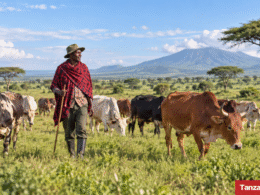
The Tanzania agriculture sector contributes to approximately 30 percent of the country’s GDP, more that 40 percent of the foreign currency earning and employs more than 70 percent of rural farmers in addition to meeting almost 100 percent of the food needs of the country’s estimated 44 million people.
Want to know more about Agriculture in Tanzania? Our free overview of the Tanzania Business and Investment Guide 2026 covers Agriculture, plus key sectors and investment opportunities. The complete 141-page edition includes policies, taxation, key regulations, full macroeconomic data, and sources, and is also available at no cost upon completion of a short form.
Download Free OverviewGet the Full Edition for Free