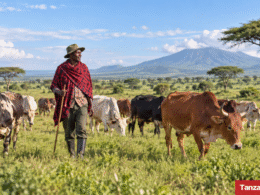


The community of Shinyanga, in the northern central region of Tanzania, has been recently cited by Thomson Reuters Foundation (TRUST) as one of the districts where farmers have shifted to grow orange-fleshed sweet potato (OFSP) from the traditional maize crops, which are being hit by the recent longer droughts throughout the country.
According to TRUST, the OFSP was selected due to its higher resiliency, when compared with other crops, to extreme weathers caused by droughts or heavy rains.
In addition, the crop was already included in the drought-coping strategies developed by the Tanzanian Agriculture Training Institute – Ukiriguru (MATIU), which carries out long-term training courses for agricultural technicians and farmers to improve and develop community strategies in the sector.

These strategies are meant to support the Global Hunger & Food Security initiative of the US Department of State which through the program Feed the Future, seeks to reduce chronic hunger and raise food availability, to end poverty in developing countries.
In Tanzania, Feed the Future is aiming at investments in strategic regions to maximize the program’s results.
These regions comprise a total of 10.6 million people from which 37.2% are living in poverty and 48.3% of children under 5 are suffering stunting.
So far, the program has helped 100,000 farmers to use new technology and management practices on 103,900 hectares which have helped the community to increase the value of their agricultural product sales by more than USD 19 million in 2014 at an investment of USD 152 million leveraged by Feed the Future.
The Tanzanian program expects to reach the same results achieved in Uganda, which represented Feed the Future’s pilot country where poverty was reduced by 16% in rural areas and stunting was decreased from 45% to 39% on children below the 5 years old as of 2014 according to United States Agency for International Development (USAID) and United Nations Children’s Fund (UNICEF) statistics.

Want to know more about Agriculture in Tanzania? Our free overview of the Tanzania Business and Investment Guide 2026 covers Agriculture, plus key sectors and investment opportunities. The complete 141-page edition includes policies, taxation, key regulations, full macroeconomic data, and sources, and is also available at no cost upon completion of a short form.
Download Free OverviewGet the Full Edition for Free