



The African Development Bank (AfDB) has recently released its East Africa Economic Outlook 2021 report, estimating that Tanzania’s GDP will grow by 2.8% in 2021, and projecting a strong rebound for 2022 and 2023 with 4.9% and 6.3% economic growth respectively.
The report reviews the economic performance of the 13 countries under the AfDB’s East Africa Regional Development and Business Delivery Office: Burundi, Comoros, Djibouti, Eritrea, Ethiopia, Kenya, Rwanda, Seychelles, Somalia, South Sudan, Sudan, Tanzania, and Uganda.
Performances of the East African Economies
The report explains that COVID-19 has had diverse impacts across the region.

Countries highly dependent on tourism (like Seychelles) have been hit hardest.
Countries that are more diversified (like Kenya) have experienced fewer adverse impacts.
And commodity exporters (like Tanzania) have been slightly more resilient due to rising prices for commodities, particularly gold.
All in All, East Africa is the only region in Africa that avoided a recession in 2020, thanks to better performance in agriculture, sustained public spending on large infrastructure projects, and increased regional economic integration.
In many countries—Djibouti, Ethiopia, Kenya, and Tanzania— construction, supported by an acceleration in public investments (particularly in large infrastructure projects), drove growth on the supply side.

But political fragility in some countries and limited economic diversification in others were major impediments to growth.
East Africa’s GDP growth is projected to recover to 3.0% in 2021 from 0.7% in 2020, supported by the global economic recovery.
However, the slow rollout of COVID-19 vaccines and risks of spikes in infections could dampen that outlook.
East Africa is also experiencing a progressive change in the composition of GDP, from predominantly agriculture to services.
But the transition to higher value-added economic activities—which signals structural transformation—has been slow.
In 2022, the top performers are projected to be Rwanda with projected GDP growth of 6.9%, Kenya and Djibouti (6.4%), and Tanzania (4.9%).
And in 2023, Tanzania is projected to be the top performer in East Africa, after Rwanda (8.1%), with a GDP growth of 6.3%.
The Economy of Tanzania in 2022
In April 2021, Tanzania’s new president Samia Suluhu Hassan gave her first speech to the parliament, mentioning the priorities of the Sixth Phase Government in the next five years to reach a GDP growth rate of at least 8% yearly.
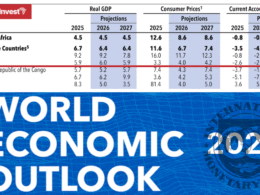
However, the IMF projects a GDP growth for Tanzania of +5.1% in 2022, and 6.0% in 2026.
Want to know more about the Economy in Tanzania? Our free overview of the Tanzania Business and Investment Guide 2026 covers the Economy, plus key sectors and investment opportunities. The complete 141-page edition includes policies, taxation, key regulations, full macroeconomic data, and sources, and is also available at no cost upon completion of a short form.
Download Free OverviewGet the Full Edition for Free