


The Bank of Tanzania (BOT) has releases its Monetary Policy Committee (MPC) on 28th May 2021 to review recent implementation of monetary policy, as well as performance of domestic and global economies.
The MPC was pleased with the good performance of the economy, which is in the midst of global spillover of the adverse impact of the Covid-19 pandemic.
GDP growth is estimated at 4.8% in 2020, lower than the earlier projection of 5.5%, reflecting the adverse impact of the pandemic.

In 2021, the economy is projected to grow by 5.6%, reinforced by construction, agriculture and transport and communication activities.
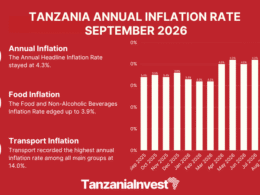
Inflation remained low, within the target range of 3-5%. The risk of an increase in inflation remains muted, although a sudden rise in oil prices in the world market could lead to a rise in domestic pump prices.
Economic Recovery
The external sector of the economy continued to face spillover effects of the pandemic, but seemingly regaining momentum, as global trade and investment normalize.
As earnings from gold nearly offset the underperformance of tourism, the current account deficit remained relatively low, albeit moderately rising.
Foreign exchange reserves were within the country, as well as EAC and SADC benchmarks. This helped to maintain the stability of the exchange rate and provided a buffer against short-term external shocks.

The MPC reiterated the need to diversify export markets and promoting value addition of exports in order to limit the vulnerability of the external sector.
Private Sector Growth
Private sector credit growth improved to 4.8% in April 2021 but remained lower than pre-pandemic historical averages.
Sustained high growth of credit to the private sector is expected in the outer period of 2020/21, due to ongoing reforms to improve the business environment, post-pandemic measures, and easing of lockdown measures in trading partner countries.
The MPC was satisfied with Government efforts to fast-tracking verification and payment of expenditure arrears and VAT refund, which is expected to boost credit growth and potentially provide tax space. The banking sector was capitalized and capable to support the growth of credit to the private sector.
Want to know more about the Economy in Tanzania? Our free overview of the Tanzania Business and Investment Guide 2026 covers the Economy, plus key sectors and investment opportunities. The complete 141-page edition includes policies, taxation, key regulations, full macroeconomic data, and sources, and is also available at no cost upon completion of a short form.
Download Free OverviewGet the Full Edition for Free