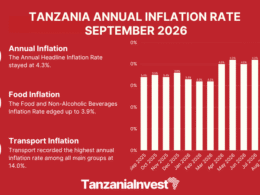



The National Bureau of Statistics of Tanzania (NBS) revealed that the Annual Headline Inflation Rate for January 2024 has stagnated at 3.0% as it was recorded in December 2023.
Meanwhile, the overall National Consumer Price Index (NCPI) went up from 110.81 recorded in January 2023 to 114.09 in January 2024.
Food and Non-Alcoholic Beverages Inflation Rate for January 2024 has decreased to 1.5% from 2.3% which was recorded in December 2023.

On the other hand, the Annual Inflation Rate for all items without food and non-alcoholic beverages for January 2024 has also decreased to 2.8% from 3.3% that was recorded in December 2023.
Monthly Consumer Price Index December 2023-January 2024
The National Consumer Price Index between December 2023 and January 2024 has increased by 0.7%. The increase in the overall index is attributed to price increases for some food and non-food items.
Some food items that contributed to an increase in the index include sorghum flour by 3.9%, fresh sardines by 0.8%, dried sardines by 2.6%, round potatoes by 1.6%, dried peas by 0.8%, and dried cowpeas by 0.6%.
Some Non-Food items that contributed to an increase in the index include; kerosene by 1.7%, firewood by 3.9%, charcoal by 4.0%, health services by 0.7%, passenger transport by road by 2.1%, passenger transport by taxi by 2.2%, transportation of pupils by school bus between their homes and school by 9.2%, education services (school fees) by 1.6%, food and beverage serving services by 1.4%, and personal care by 2.2%.
Changes in Tanzania National Consumer Price Indices (NCPI) for January 2024, (2020 = 100)

Want to know more about the Economy in Tanzania? Our free overview of the Tanzania Business and Investment Guide 2026 covers the Economy, plus key sectors and investment opportunities. The complete 141-page edition includes policies, taxation, key regulations, full macroeconomic data, and sources, and is also available at no cost upon completion of a short form.
Download Free OverviewGet the Full Edition for Free