

In its speech during the official opening of the 12th Parliament of Tanzania on 13th November 2020, President-elect John Magufuli announced that in the next five years its government will put great emphasis on key economic sectors, especially agriculture, livestock, fisheries, industry, mining, trade and tourism.
“These sectors are the ones that employ most Tanzanians. If we succeed to grow them, our economy will grow faster and we will reduce poverty and unemployment in the country” Magufuli explained.

The main priority will be cotton, cashew nuts, tea, coffee, tobacco, sisal, palm oil, cocoa, sunflower, cane, and food crops.
“We intend to increase productivity, assure food security, and increase extra export. To achieve this, we will ensure that the best agricultural inputs, tools, and practices, including seeds, fertilizers, pesticides, and tractors, are available and affordable. We will increase areas with wells for irrigation from 561,383 hectares to 1.2 million hectares by 2025 to reduce dependence on rain.
We will strengthen access to capital for smallholder farmers and investors in partnership with financial institutions, including the Tanzania Agriculture Development Bank (TADB) and other banks.
We will also address the problem of crop post-harvest losses by constructing warehouses in various places in the country, increasing our crop storage capacity from the current 190,000 tons to 501,000 tons.
We also intend to introduce agricultural insurance service and enter trade agreements with consumer countries and buyers to have a reliable market.”

Livestocks
“Over the next five years, we intend to grow the livestock sector by adding grazing fields from the current 2,788,901 hectares to 6,000,000 hectares. Along with that, we will encourage modern animal husbandry; we will increase the production of animal feed manufactured from 900,000 tons to 8 million tons. In addition, we will complete the construction of abattoirs in various parts of the country.”
Fishery
“Along with managing the ocean resources, we will promote fishing activities in our Great Lakes (Victoria, Tanganyika and Nyasa) and in our major rivers. We will encourage fishermen by providing capital, skills, equipment and fishing tools. We will also review the levies, relieve fishermen of nuisance and attract investment.”
“Over the past five years, we have succeeded to build 8,477 new factories which created about 480,000 jobs. In the next five years we will put emphasis on factories that use the raw materials available in abundance in Tanzania. To attract investment in the manufacturing sector, we will continue to improve the business environment, including looking at tax issues and removing restrictions and bureaucracy. I want investors to get approval for their projects within 14 days, and for this I have decided that the Tanzania Investment Center (TIC) will be relocated from the Prime Minister’s Office to the President’s Office.
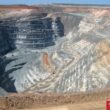
“Revenues from mining have increased from 168 billion shillings a year in 2014/2015 up to 527 billion shillings a year in 2019/2020. The contribution of the mining industry to GDP has increased from 3.4% in 2015 to 5.2% in 2019. In the next five years, we will continue to strengthen the protection and management of our minerals, by strengthening our laws and not to be deprived of revenues. We will also continue to strengthen our State Mining Corporation (STAMICO) to participate fully in mining activities and enable our small miners by providing mining sites, training, loans, and equipment. And we will revoke the licenses of those who have been given them but have not developed their projects and will given their sites to other miners, in particular to small miners. We will also encourage the construction of refineries and the manufacturing of mineral products. It is our belief that the mining industry will contribute at least 10% of GDP by 2025.
The number of tourists to Tanzania increased from 1,137,182 in 2015 to 1,510,151 in 2019. Tourism revenues increased from USD 1.9 billion in 2015 to USD 2.6 billion in 2019. We plan to increase the number of tourists to 5 million by 2025 and revenues to USD 6 billion. We will promote conference tourism and wildlife hunting; strengthening beach tourism, and building infrastructure enabling tourist ships to visit the country. In addition, we will continue to reduce taxes and levies.
“We have faith that these steps will enable us to achieve our goals of economic growth of at least 8% a year, raise the income of Tanzanians, reduce poverty, and create 8 million new jobs. To achieve these goals, we rely heavily on cooperating with the private sector. So, I welcome the private sector in the country and abroad to invest in the sectors I mentioned. And I assure them that Tanzania is a good and right place to invest. Last year, we have started implementing our Blueprint for Regulatory Reforms to Improve the Business Environment in Tanzania. Thus, the trade and investment environment in Tanzania is expected to be the best over the next five years.
Want to know more about the Economy in Tanzania? Our free overview of the Tanzania Business and Investment Guide 2026 covers the Economy, plus key sectors and investment opportunities. The complete 141-page edition includes policies, taxation, key regulations, full macroeconomic data, and sources, and is also available at no cost upon completion of a short form.
Download Free OverviewGet the Full Edition for Free