
Tanzania Development Vision 2025 To Focus On Industrialization And Natural Gas

President Jakaya Kikwete, who spoke during the recent USAID Frontiers in Development Conference, indicated that the government will focus on developing an industrial economy with a concentration on the growth of the Tanzania industrial sector and natural gas in order to meet the goals outlined in the second five year plan of the Development Vision 2025 (2016/17-2020/21) and further promote socio and economic development in the country.

President Kikwete explained during the recent USAID conference that the second five year plan will focus on transforming the country into a competitive semi-industrialized economy with an objective of creating new opportunities for job growth.

 “Tanzania will then be a country characterized by high quality livelihoods,” he said, “and a competitive semi-industrialized economy capable of producing growth and shared benefits.”

Tanzania Investment Guide 2026 Free Edition

The Tanzania Development Vision 2025 was first adopted in 2000 with the goal of transforming the country into a strong and competitive middle income economy by 2025.

During the first five year plan, President Kikwete indicated that the government worked to address infrastructure needs within the country’s energy and transport sectors, improved productivity in the agriculture sector, increased the number of skilled laborers, and enhanced the business environment within the country.

Want to know more about the Economy in Tanzania? Our free overview of the Tanzania Business and Investment Guide 2026 covers the Economy, plus key sectors and investment opportunities. The complete 141-page edition includes policies, taxation, key regulations, full macroeconomic data, and sources, and is also available at no cost upon completion of a short form.

Download Free OverviewGet the Full Edition for Free

Related Posts
Interview Jana Bricco IMF Resident Representative Tanzania no logo
Read More

Interview with Jana Bricco, New IMF Resident Representative in Tanzania, on Economic Growth, Private Investment, and Needed Reforms

In this exclusive interview with TanzaniaInvest, the new IMF Resident Representative Jana Bricco says Tanzania can sustain growth of around 6% by preserving macroeconomic stability and accelerating reforms supporting private investment, productivity and jobs. She calls for fewer regulatory obstacles, more predictable taxation, faster VAT refunds and better access to finance for businesses and SMEs, and explains how IMF support will evolve following the end of its financing programmes, with the relationship now focused on policy dialogue and capacity development.
Tanzania Qatar Tax Treaty Signature
Read More

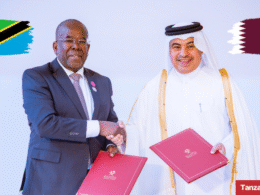
Tanzania and Qatar Sign Tax Treaty to Boost Investment

Tanzania and Qatar signed a Double Taxation Agreement (DTA) on 29 September 2026, eliminating double taxation on cross-border income between the two countries. Both countries are now moving toward rapid implementation, aiming to deepen economic cooperation and attract new investment across infrastructure, energy, tourism and financial services.
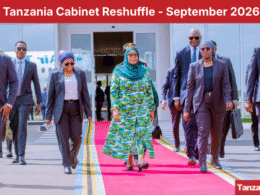
Samia Suluhu Hassan Tanzania Cabinet reshuffle September 2026
Read More

Tanzania Names New Works, Energy and Legal Affairs Ministers

President Samia Suluhu Hassan reshuffled Tanzania's Cabinet on 27 September 2026, naming new ministers for Works, Energy, and Constitution and Legal Affairs. Four other senior appointments were also announced, including a new Chief Medical Officer and Deputy Permanent Secretary for Finance.
TISEZA Investment Bulletin Q2 2026: USD 1.88 Billion Registered, SEZ Capital Hits USD 3.38 Billion as China Leads FDI
Read More

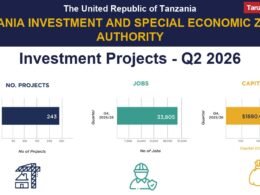
Tanzania Investment Bulletin Q2 2026: USD 1.88 Billion Registered Mostly in Manufacturing, China Leads FDI

The Tanzania Investment and Special Economic Zones Authority (TISEZA) registered 243 investment projects worth USD 1.88 billion between April and June 2026, while seven Export Processing Zone (EPZ) and Special Economic Zone (SEZ) projects attracted USD 3.38 billion, led by China. The seven EPZ and SEZ projects are projected to create 30,235 jobs and generate USD 517.8 million in export turnover, mostly in agriculture and forestry.