Tanzania Investment Centre Invites Investment Project Submissions for Partnership Opportunities

Tanzania Investment Centre Invites Investment Project Submissions for Partnership Opportunities

The Tanzania Investment Centre (TIC) is calling for submissions of investment projects in need of partnerships.

The initiative, part of TIC’s commitment to enhancing Tanzania’s economic development, is supported by TanzaniaInvest.com, reflecting our official partnership with TIC.

TIC’s role is pivotal in promoting investment opportunities within various sectors to both local and foreign investors, focusing on stimulating economic growth through collaboration. This initiative aims to attract capital, introduce modern technology, and create employment opportunities.
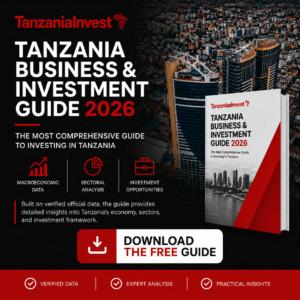
Tanzania Investment Guide 2026 Free Edition

Investors and project owners are encouraged to submit comprehensive details of their projects seeking partnerships.

Required information includes the company name, project name, location, sector, project area size, and a detailed project description (including project summary, uniqueness, sector analysis, competitive environment, and market analysis).

In addition, TIC requests information on infrastructure (land size, access to community services like roads, water, electricity, etc.), estimated project costs, current project status, and value. Contact information of the stakeholders, along with the title deed and project photos, should also be included.

Submission and Contact Information: Details about investment projects should be submitted to the Executive Director at the Tanzania Investment Centre.

Submissions can be made directly at the TIC head office located in the Golden Jubilee Building, Ohio Street, Dar es Salaam, or via email. The submission form and additional information are available on the TIC website.
TanzaniaInvest Capital Markets Report Banner

Executive Director, Tanzania Investment Centre
Head Office, Golden Jubilee Building, First Floor, Ohio Street
P.O. Box 938, Dar es Salaam
Email: info@tic.go.tz
Phone: +255 737 879087, +255 734 989 470

    Want to know more about the Economy in Tanzania? Our free overview of the Tanzania Business and Investment Guide 2026 covers the Economy, plus key sectors and investment opportunities. The complete 141-page edition includes policies, taxation, key regulations, full macroeconomic data, and sources, and is also available at no cost upon completion of a short form.

    Download Free OverviewGet the Full Edition for Free
    Related Posts
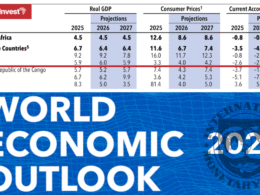
    IMF World Economic Outlook 2026 Tanzania
    Read More

    Tanzania GDP to Grow 6.0% in 2026 and 5.9% in 2027 With Inflation at 4.0%, IMF Projects

    In its World Economic Outlook October 2026, the IMF projects Tanzania’s real GDP growth at 6.0% in 2026 and 5.9% in 2027, above the 4.5% sub-Saharan Africa average and Kenya’s 4.5%, while Uganda and Rwanda are projected at 6.2% and 7.4%. Tanzania’s inflation is projected at 4.0% in 2026 and 4.2% in 2027, below the 8.6% sub-Saharan Africa average and Kenya’s 6.0%.
    Central Bank of Tanzania BOT CBR Interest Rate Q4 2026
    Read More

    BOT Maintains Tanzania Central Bank Rate at 6.25% for Q4 2026; GDP Growth Projected at 7.2% in Q4 2026, Driven by Agriculture, Construction, Mining, and Tourism

    The Bank of Tanzania (BOT) released its Monetary Policy Report of October 2026, in which the Monetary Policy Committee (MPC) decided to maintain the Central Bank Rate (CBR) at 6.25% for the fourth quarter of 2026, allowing the July 2026 increase to fully transmit through the economy. The MPC will keep policy agile and flexible to limit risks to the inflation outlook from the Middle East conflict and potential El Niño-related disruptions, and keep inflation within the 3-5% target range.
    Interview Jana Bricco IMF Resident Representative Tanzania no logo
    Read More

    Interview with Jana Bricco, New IMF Resident Representative in Tanzania, on Economic Growth, Private Investment, and Needed Reforms

    In this exclusive interview with TanzaniaInvest, the new IMF Resident Representative Jana Bricco says Tanzania can sustain growth of around 6% by preserving macroeconomic stability and accelerating reforms supporting private investment, productivity and jobs. She calls for fewer regulatory obstacles, more predictable taxation, faster VAT refunds and better access to finance for businesses and SMEs, and explains how IMF support will evolve following the end of its financing programmes, with the relationship now focused on policy dialogue and capacity development.