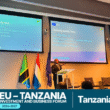

In a recent visit two-day to Tanzania that was meant to enhance the political and economical relationship between Tanzania and Turkey, the President of Turkey, Abdulla Gul, and 120 Turkish businessmen organized a Turkey-Tanzania Business forum to discuss potential areas for trade and cooperation between the two countries.
The Business forum was hosted by the Confederation of Turkish Businessmen and Industrialists (TUSKON) with the expectation that it will help create new areas of trade and commerce between Turkey and Tanzania.
The Minister for Industry, Trade and Marketing, Dr. Mary Nagu, spoke at that forum and encouraged the Turkish business community to invest in Tanzania.
“We need you to transform our export trade, from exporting raw materials to value added items,” said Dr. Nagu, “We assure you that the business community is ready for your partnership and the government is assuring you full support.”

According to the President Gul, Turkish businessmen and women are primarily interested in investing in the Tanzania agriculture sector, as the two countries have signed a protocol on Technical, Scientific and Economic co-operation in Agriculture.
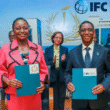
The protocol was signed by the Tanzanian Minister for Agriculture, Food Security and Cooperatives, Steven Wassira, and the Turkish Minister of State, Mustafa Yazicioglu.
Mr. Wassira said that the protocol was designed to help facilitate the exchange of information between the two countries and to help publicize the results of various agricultural research projects, which would, in turn, help to increase the progression of the sector.
“They are very advanced in agricultural training,” said Mr. Wassira, “In fact that is another area that is covered in the protocol.”
In addition, Mr. Wassira went on to indicate that the protocol will help to quicken the process for investment in the agricultural sector for Turkish investors.

“We would like them to invest in our agriculture, from the cultivation to the processing of produce to add value to our exports,” he said.
The agricultural sector in Tanzania currently serves as the basis of the nation’s economic system and provides approximately half of the total national income, the-fourths of the merchandise exports and employment to approximately 80 percent of Tanzanians.
However, investment from Turkey is needed in order to help further enhance and improve the sector.
Given the stable and peaceful political environment as well as the wide availability of natural and human resources President Gul has indicated that Turkey views Tanzania as an attractive destination for foreign investors.
“Having the political stability, without forgetting other factors, has made Tanzania a very attractive country for investment,” said President Gul.
In addition, President Gul indicated that Turkish investors were also interested in opportunities in infrastructure, health, and in the rehabilitation of both the sea and air ports as well as the construction of housing.
Following the two-day meeting, Tanzanian President Jakaya Kikwete confirmed that he plans to attend the fourth Turkey-Africa forum in Ankara later this year.
Want to know more about Trade in Tanzania? Our free overview of the Tanzania Business and Investment Guide 2026 covers Trade, plus key sectors and investment opportunities. The complete 141-page edition includes policies, taxation, key regulations, full macroeconomic data, and sources, and is also available at no cost upon completion of a short form.
Download Free OverviewGet the Full Edition for Free