

Global energy companies Equinor and Shell have recently urged the government of Tanzania to conclude negotiations on the country’s planned liquefied natural gas (LNG) export facility arguing that timing is critical for the success of the project.
In an open letter written by Frederik Grootendorst, Managing Director of Shell Exploration and Production Tanzania and Dr. Mette Halvorsen Ottoy, Country Manager of Equinor Tanzania and published in The Citizen, the two executives remind that natural gas resources is a huge opportunity for Tanzania.
They estimate that that Tanzania’s LNG in international markets could be worth TZS 10 trillion a year, based on today’s market prices. And sales of LNG, taxes, royalties, and dividends will bring large revenues to Tanzania which could be used to contribute to the country’s economic development.

However, demand growth for oil and gas could be slower than previously anticipated and the value of natural gas resources over the long term may decrease, perhaps aided by the coronavirus pandemic.
And a mega project like this takes years to plan, design and execute and hence critical decisions are required now in order to supply the Tanzanian industries of the future with energy.
Shell and Equinor recognize the challenges brought about by current global market dynamics and they strongly believe a joint LNG project is the correct response.
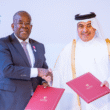
This is why the two companies officially decided to join forces and signed a Memorandum of Understanding (MoU) in January 2021 for collaboration on the LNG project.
In addition, they reminded that a stable and competitive legal and fiscal framework is crucial to ensure that Tanzania can compete with other countries in the global LNG marketplace and create synergies from the best technologies.

Tanzania Liquefied Natural Gas Project (TLNGP)
Tanzania has proven natural gas reserves of 57 trillion cubic feet, with at least 49.5 trillion cubic feet (Tcf) of those reserves far offshore in the Indian Ocean.
Equinor started exploration drilling activities in Block 2 Offshore Tanzania in 2011. A total of 15 exploration wells have been drilled, resulting in nine discoveries with estimated volumes of more than 20 Tcf of gas in place.
The Tanzania Liquefied Natural Gas Project (TLNGP), also knows as the Likong’o-Mchinga Liquefied Natural Gas Project (LMLNGP), is a planned liquefied natural gas processing plant to be located on the Indian Ocean, opposite Tanzania’s main offshore gas exploration sites.
The Ministry of Energy of Tanzania first announced its intention to develop an LNG plant in Tanzania in 2014. Following an extensive site selection process, a site was identified in the Lindi region to host the onshore LNG plant.
However, in 2019 Tanzania suspended talks with the foreign investors to pave the way for a review of the country’s production sharing agreement (PSA) regime ordered by the late President John Magufuli.
And in February 2021, Equinor decided to write down the book value of its TLNG on the company’s balance sheet by USD 982 million.
The company explained that while progress has been made in recent years on the commercial framework for TLNG, overall project economics have not yet improved sufficiently to justify keeping it on the balance sheet. However, Equinor would continue to engage with the Government of Tanzania in negotiations on a commercial, fiscal and legal framework that may provide a viable business case for TLNG in the future.
Want to know more about Energy in Tanzania? Our free overview of the Tanzania Business and Investment Guide 2026 covers Energy, plus key sectors and investment opportunities. The complete 141-page edition includes policies, taxation, key regulations, full macroeconomic data, and sources, and is also available at no cost upon completion of a short form.
Download Free OverviewGet the Full Edition for Free