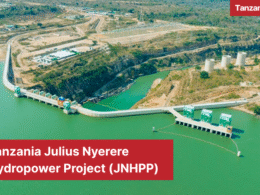




The Tanzania Electric Supply Company Limited (TANESCO) has recently announced that the government keeps it focus on shifting from hydropower to gas-fired and renewable energy plants, meant to meet the current growing electricity demand and diversify its power generation sector.
The announce was done by TANESCO’s Managing Director, Mr. , whom explained that the country over-relied on hydropower facilities as the main source of electricity generation and now it is seeking to diversify its installed capacity.
TANESCO is supporting a plant to further reduce hydropower dependence by 15% in the short-term with gas-fired plants and is working under a roadmap with an energy mix including renewable and other sources to make electricity generation sustainable in the country, Mr. Mramba added.

According to TANESCO, the country has already reduced its dependence from hydropower by almost 36% from representing 57% of the total electricity generated in 2012 to 35% at the end of 2015 thanks to 245 MW of power capacity that has been added to the national grid thanks to natural gas delivered from the Mnazi Bay in Tanzania’s southern coastal region.
On the other hand, renewable energy does not play an important role yet on Tanzania’s power generation capacity since the only source accounting for the 1,754 MW of capacity installed in national grid is biomass with 1.5% of the total.
Tanzania has not so far tapped its renewable energy potential to use other sources as geothermal, wind and solar to reduce its reliance from hydropower, explained Mrs. Agnes Mwakaje, University of Dar es Salaam’s Climate Change Expert.
However, the country is working and investing in alternative power generation projects to tap its wind, power and geothermal resources to meet the current hydropower shortage and give time to the main dams across the country to fill again, added the Minister of Energy and Minerals Sospeter Muhongo.
The Tanzania Geothermal Development Company Limited (TGDC) has recently signed a Memorandum of Understanding (MoU) with Toshiba Corporation (TYO:6502) to add to the country’s current capacity installed of 1,754 MW, a total of 100 MW by 2020, 500 MW by 2022 and 800 MW by 2025.

The MoU signed between both institutions lies under the Scaling up Renewable Energy Program (SREP) and Tanzania Development Vision 2025, which aim at reaching 10,000 MW of diversified power generation capacity.
Moreover, East African Wind Energy Limited (EAWEL), a newly incorporated company to be involved in the renewable energy sector in East and Central Africa, announced last year that Singida Wind Power Project, the first wind farm to be connected to Tanzania’s national grid, will start operating by end of 2017 at a capacity of 100 MW.
According to TGDC, Tanzania has a geothermal electricity generation potential up to 5,000 MW thanks to its strategic position between the eastern and western arms of the East African Rift Valley, which has given Tanzania the third largest geothermal resources in Africa following Kenya and Ethiopia with approximately 10,000 MW.
Want to know more about Energy in Tanzania? Our free overview of the Tanzania Business and Investment Guide 2026 covers Energy, plus key sectors and investment opportunities. The complete 141-page edition includes policies, taxation, key regulations, full macroeconomic data, and sources, and is also available at no cost upon completion of a short form.
Download Free OverviewGet the Full Edition for Free