

Tanzania invites international investors to partner with the Tanzania Petroleum Development Corporation (TPDC) to explore Tanzania’s oil and natural gas potential.
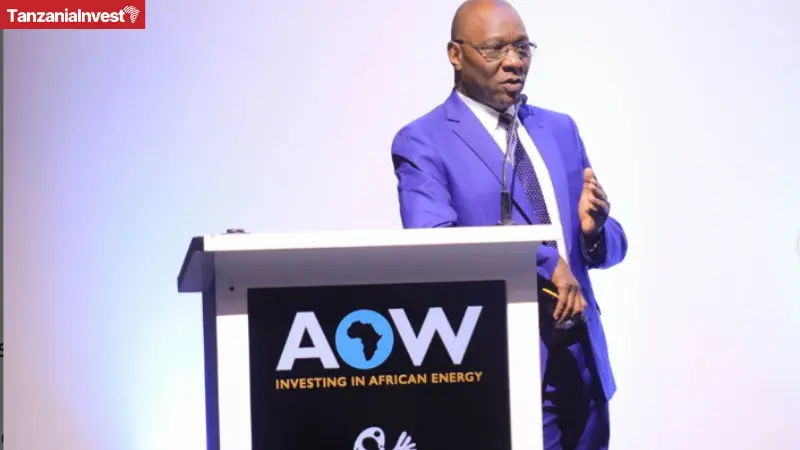
This announcement was made on 10th October 2024 by Tanzania’s Deputy Permanent Secretary of the Ministry of Energy, Dr. James Mataragio during his presentation at Africa Oil Week 2024, held in Cape Town, South Africa.
Africa Oil Week is an annual event that connects industry leaders, government officials, and investors in Africa’s oil and gas sector featuring discussions, networking, and exhibitions focused on investment trends, policy developments, and technological innovations.

At the event, Dr. Mataragio highlighted that the country’s oil and gas blocks available for exploration include the Mnazi Bay North, the Eyasi-Wembere, the Songo Songo West, and Blocks 41B and 41C and shared insights into recent studies indicating resource potential in these areas.
He welcomed investment in Tanzania’s geothermal energy sector, naming several sites, including Ngozi, Kiejo-Mbaka, Songwe, Luhoi, and Natron.
He added that these geothermal projects offer significant potential for electricity generation, aligning with Tanzania’s broader strategy to diversify its energy sources.
He also highlighted Tanzania’s commitment to sustainable energy and power self-sufficiency, showcased by the country’s major energy projects.
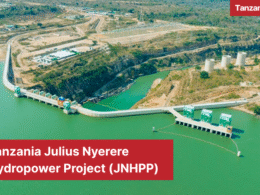
Dr. Mataragio pointed to the Julius Nyerere Hydropower Project (JNHPP) as a transformative development that will not only meet Tanzania’s domestic electricity needs but also allow for power exports to neighboring countries.

He also shared updates on the East African Crude Oil Pipeline (EACOP) project, in which Tanzania holds a 15% stake, and ongoing negotiations for the Liquefied Natural Gas (LNG) project.
“Tanzania is an attractive investment destination due to its political stability, investor-friendly policies, supportive infrastructure, and access to both domestic and regional markets,” stated Dr. Mataragio.
During the event’s panel discussion, Tanzania’s Petroleum and Gas Commissioner Goodluck Shirima elaborated on Tanzania’s existing gas transportation infrastructure, such as the Mtwara-Dar es Salaam gas pipeline.
Shirima also outlined the government’s strategic plans to export gas to regional markets, including Kenya, Uganda, and Malawi.
Tanzania’s Oil, Gas, and Geothermal Energy Sector
Tanzania has proven natural gas reserves of 57 trillion cubic feet, with at least 49.5 trillion cubic feet (Tcf) of those reserves far offshore in the Indian Ocean.
The government is prioritizing the development of these resources to meet domestic energy demands and unlock export opportunities.
A key project in this endeavor is the Tanzania LNG Project, which aims to establish a liquefied natural gas (LNG) plant in the Lindi region.
Additionally, the East African Crude Oil Pipeline (EACOP) is a major infrastructure project aimed at transporting crude oil from Uganda to the port of Tanga in Tanzania. Spanning approximately 1,443 kilometers, it is set to become the longest-heated pipeline in the world.
Alongside these developments, Tanzania is harnessing its geothermal energy resources, particularly in the East African Rift Valley region, and has identified a capacity of up to 5,000 MW of geothermal energy.
Currently, there are 22 oil companies engaged in exploration activities across Tanzania and Tanzania’s government is inviting further participation from international oil companies (IOCs) and specialized investors to explore deep-sea blocks and other promising areas.
Want to know more about Energy in Tanzania? Our free overview of the Tanzania Business and Investment Guide 2026 covers Energy, plus key sectors and investment opportunities. The complete 141-page edition includes policies, taxation, key regulations, full macroeconomic data, and sources, and is also available at no cost upon completion of a short form.
Download Free OverviewGet the Full Edition for Free