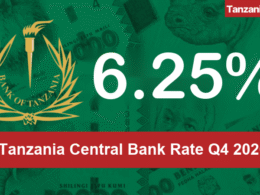




The Bank of Tanzania (BOT) Monetary Policy Committee (MPC) convened its 228th Meeting on 27th October 2023 to assess the implementation of monetary policy and review the recent performance of the economy and outlook.
The statement provides insights into the nation’s economic trajectory and the effectiveness of its monetary policies.
The MPC noted that the implementation of the less accommodative monetary policy successfully maintained liquidity in the economy at appropriate levels in August, September, and October 2023.

This, combined with supportive fiscal and structural policies, has contained inflationary pressures, facilitated economic activities, and preserved the stability of the financial sector amidst challenges in the global economic environment.
The policy stance has also helped to reduce foreign currency demand pressure.
Banks’ Lending to the Private Sector
The MPC highlights strong credit growth with credit to the private sector growing at around 22% in July and August, before moderating to 19.5% in September 2023, which was above the projection of 16.4% for the end of December 2023.
The robust growth of credit is attributable to the improving business environment, reinforced by the less accommodative monetary policy. Credit was largely registered in agricultural activities relative to others.
The banking sector remained adequately capitalized, liquid, and profitable. The assets continue to improve, as reflected by a decline in the non-performing loans ratio to 5.2% in September 2023 from 7.3% in September 2022.

The decline is expected to motivate banks to increase lending to the private sector.
Current Account Performances
The MPC explains that Tanzania’s current account deficit is narrowing but remains high due to the increase in commodity prices in the world market.
The current account deficit narrowed to USD 3,652.6 million year-on-year in September 2023 from USD 4,728.2 million in September 2022. The improvement was mainly driven by a rise in earnings from tourism.
The current account position is expected to gradually improve, driven by earnings from tourism, gold, and traditional export crops.
As for Zanzibar, the current account deficit widened to USD 417.1 million in the year ending September 2023, from a deficit of USD 344.8 million, mainly on account of an increase in imports of goods and services.
Foreign exchange reserves remained above USD 5 billion in July-October 2023, with import cover within the country’s and EAC benchmarks of at least 4 and 4.5 months, respectively.
The MPC also notes that the recent observed shortage of foreign currency is gradually improving owing to earnings from tourism, minerals, manufacturing, and cash crops.
In light of this background, the MPC decided to sustain the less accommodative monetary policy.
The policy stance will continue to be implemented in close collaboration with fiscal and structural policies.
Monetary policy measures will also be implemented to achieve the targets under the IMF’s Extended Credit Facility Program for the quarter ending December 2023.
Want to know more about Banking in Tanzania? Our free overview of the Tanzania Business and Investment Guide 2026 covers Banking, plus key sectors and investment opportunities. The complete 141-page edition includes policies, taxation, key regulations, full macroeconomic data, and sources, and is also available at no cost upon completion of a short form.
Download Free OverviewGet the Full Edition for Free