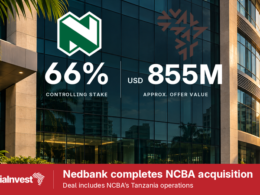



The Tanzania Savings & Finance Commercial Bank (S&F), a mid-sized bank in the country’s financial sector, is currently working on a deal that would allow Kenya’s NIC Bank a controlling stake in the in the Tanzania bank.
Earlier this week, NIC Bank officially announced that it was looking to acquire a 51 percent stake in the Tanzania-based company as its first cross-border acquisition.
While this proposed acquisition is still subject to regulatory approval in both countries, it already underlines a strategy for growth and expansion in the region.

The announcement was made earlier this week by representatives from the Kenya-based bank who said that the two companies were in the process of working towards completing the deal.
According to James Ndegwa, the NIC Chairman, the transaction between the two companies is expected to be completed by next April.
In addition, Mr. Ndegwa went on to say that his bank would arrange a special general meeting for its shareholders in order for them to approve the deal, which is set to be financed by the proceeds of NIC’s rights issues that were conducted late last year.
“The expansion of the bank, including the increase in branch network and the now acquisition of the bank, has been supported by the funding from the successful rights issue in November 2007 that raised Sh1.2billion,” said Ndegwa.
According to NIC’s Managing Director, James Macharia, he expects that the bank will greatly benefit from the experience of the S&F shareholders and would also help to make the bank more competitive in the region, diversify its business and enhance the service it has available to its cross-border customers..

“Its (S&F) shareholders and directors have significant experience in the Tanzanian financial sector and this will definitely strengthen our competitive position,” said Macharia in a recently released statement.
In addition to purchasing a majority of the shares, the NIC Bank is also expecting to invest an added Sh155 million for an equity in the bank.
The NIC bank has also recently opened four branches in Nairobi and Mombasa and has made plans to enter Thika and Kisumu early next year and will open an additional 20 branches at that time, thus continuing to strengthen its position in the increasingly competitive market.
It has also opened four new branches in Nairobi and Mombasa this year and plans to go to Thika and Kisumu early next year, and plans to open up additional 20 branches.
Want to know more about Banking in Tanzania? Our free overview of the Tanzania Business and Investment Guide 2026 covers Banking, plus key sectors and investment opportunities. The complete 141-page edition includes policies, taxation, key regulations, full macroeconomic data, and sources, and is also available at no cost upon completion of a short form.
Download Free OverviewGet the Full Edition for Free