Major Advancements at Kabanga Nickel Project: 69% Increase in Measured and Indicated Resources

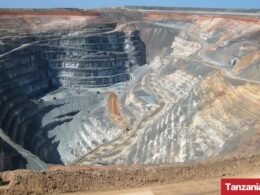
Kabanga Nickel Deposit


Lifezone Metals Limited (NYSE: LZM) has reported a substantial update to the mineral resources of its Kabanga Nickel Project in northwest Tanzania.

The updates stem from their 2021-2023 drilling programs and a revised interpretation of mineralization.

The updated Mineral Resource Report, dated November 2023, reveals a 69% increase in Measured and Indicated Resources, with an additional 20% rise in Inferred Resources.

Tanzania Investment Guide 2026 Free Edition

The update confirms the continuity of high-grade nickel mineralization at Kabanga. Measured and Indicated Resources now total 43.6 million tonnes and Inferred Resources at 17.5 million tonnes.

Chris Showalter, CEO of Lifezone Metals, commented: “Kabanga continues to demonstrate its exceptional quality and world scale. The significant increase in the Measured and Indicated Mineral Resources provides a solid foundation for the ongoing Definitive Feasibility Study, which is expected to be completed by the end of Q3 2024. We believe that Kabanga has the potential to become a low-cost, long-life and environmentally responsible producer of nickel, copper and cobalt, which are critical metals for the green energy transition. We look forward to advancing the Project in close coordination with the Government of Tanzania, who have been highly supportive of our efforts.”

The Kabanga Nickel Project

The Kabanga Nickel Project was acquired by Lifezone in 2021. The company believes that the Project comprises one of the world’s largest and highest-grade nickel sulfide deposits.

It intends to be a mine-to-metal mining operation producing battery-grade nickel, copper, and cobalt.

Related Posts
Tanzania Mineral Testing Laboratory Dodoma 3d plan
Read More

Dodoma Mineral Testing Laboratory on Track for September 2027 Completion

The Geological Survey of Tanzania (GST) says construction of its Dodoma mineral testing laboratory in Kizota, Dodoma, is progressing on schedule, with completion set for September 2027, a year after Minister for Minerals Anthony Mavunde laid the foundation stone in August 2025. The TZS 14.3 billion (approx. USD 5.4 million) facility is expected to become the largest of its kind in East and Central Africa, offering internationally accredited testing services and easing long-standing sample-analysis delays for artisanal and small-scale miners.
IMF Tanzania flag
Read More

IMF Approves USD 443.9 Million for Tanzania, Projects 6.2% GDP Growth Supported by Mining, Agriculture, and Tourism

The IMF Executive Board has approved an immediate disbursement of USD 443.9 million to Tanzania after completing the final reviews under the Extended Credit Facility and Resilience and Sustainability Facility programmes. The IMF said Tanzania maintained strong economic growth and macroeconomic stability while highlighting the need for continued reforms and fiscal consolidation.
Tanzania Grinding-Ball
Read More

Chinese Company to Build Grinding-Ball Factory at Buzwagi SEZ

China's Oriental Casting and Forging Ltd plans to establish a factory for steel grinding balls and other mining consumables at the Buzwagi Special Economic Zone in Kahama, Shinyanga, following a meeting between Minister of Minerals Anthony Mavunde and the company's managing director Hou Songcun. The project is part of Tanzania's push to manufacture mining consumables locally, cut import dependence and position itself as a regional supply hub, though no investment value or job figures have been disclosed.
Tanzania Mining Revenues 2025-2026
Read More

Tanzania Mining Revenue Hits TZS 1.39 Trillion in 2025/26, Beating Target by 16%

Tanzania mining revenue reached TZS 1.394 trillion (± USD 558 million) in the 2025/26 financial year, surpassing the annual target of TZS 1.2 trillion by 16.13% and marking a 30.2% increase over the TZS 1.071 trillion collected in 2024/25. The result caps a period of rapid growth for the sector, whose GDP contribution averaged 11.9% in 2025 and whose mineral exports rose 31.1% to USD 5.4 billion.