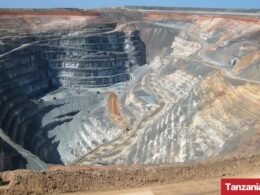


East Africa-focused gold mining company Shanta Gold (AIM: SHG), announced that it has been awarded a maiden mining license (ML 673/2022) covering the Porcupine South resource area of the Lupa Gold Fields in southwest Tanzania, north of Mbeya.
Porcupine South area size is approximately 10 sq km and is 22 km away from the New Luika Gold Mine Processing Plant, Shanta Gold’s main operation in Tanzania, which makes it an economically feasible trucking distance, the company explains.
The new mining license comprises an initial 10-year period renewable for two further
10-year periods.

Porcupine South Highlights
• Current Joint Ore Reserves Committee (JORC) resources of 1,183 k tonnes grading 1.94 g/t containing 114,000 oz gold
including:
-Indicated resources of 986 k tonnes grading 2.15 g/t containing 68,000 oz gold
-Inferred resources of 852 k tonnes grading 1.68 g/t containing 46,000 oz gold
• Mineralisation remains open at depth and along strike
• Current strike length of 500 meters.
Drilling at Porcupine South is planned for H2 2022 and will focus on defining the geometry of the mineralized structures and testing their down-plunge continuity extension with the potential to generate new additional resources. The drilling program is designed to test the mineralized structure to level 1120mRL (~120m vertical depth).
Eric Zurrin, CEO of Shanta Gold, commented: “Porcupine South is an orebody that was newly discovered in 2020, taking the known deposits at NLGM to twelve, each of which has the potential to increase in size. With the award of this maiden mining license plus extendable periods all-in totaling 30 years, Porcupine South will become the central piece to a district play covering highly prospective surrounding prospecting licenses also owned by Shanta. The award of this mining license is a major catalyst toward consolidating this district in what would otherwise be an area of stranded uneconomic ounces with no access to a processing plant. Forecasts are now being updated to convert resource ounces into mineral reserves leading to an extension of the life of the mine at New Luika Gold Mine.
Ahead of the near-term first production at Singida due in Q1 2023, New Luika remains the linchpin in our commitment to self-financed growth. Ensuring that the mine-life of our current principal producing asset continues to grow will de-risk our strategy to deliver long-term sustainable returns for shareholders.”
Tanzania Gold
Tanzania’s gold reserves are estimated at about 45 million ounces and Tanzania’s gold production in Tanzania stands at around 50t per year.
Shanta Gold’s New Luika Gold Mine is currently the 4th largest mine in the country with gold production of about 80,000 ounces per year although it was only 55,280 ounces in 2021.

Want to know more about Mining in Tanzania? Our free overview of the Tanzania Business and Investment Guide 2026 covers Mining, plus key sectors and investment opportunities. The complete 141-page edition includes policies, taxation, key regulations, full macroeconomic data, and sources, and is also available at no cost upon completion of a short form.
Download Free OverviewGet the Full Edition for Free