


Parks
Tanzania has registered 34 Special Economic Zones and 31 privately owned Industrial Parks, alongside iconic tourism assets such as Serengeti National Park that helped attract over 2.29 million international arrivals in 2025[1].
Parks in Tanzania span two complementary investment universes: industrial parks (Special Economic Zones, Export Processing Zones, and integrated agro and technology parks) that anchor manufacturing, logistics and innovation, and national parks that drive the tourism economy.
Both categories are central pillars of the country's transformation agenda under Development Vision 2050, with fiscal incentives, PPP financing frameworks, and dedicated ministerial direction guiding their expansion.
Contents
Industrial Parks, SEZs and EPZs
In 2005, in support of Tanzania's Development Vision 2025, the country adopted the Asian economic development model known as the Mini Tiger Plan 2020, focusing on creating employment by attracting FDI and promoting exports through the establishment of Industrial Parks in the form of Special Economic Zones (SEZ) and Export Processing Zones (EPZ).
These areas of land are set aside, planned, and zoned for industrial development, with basic onsite infrastructure such as roads, transportation, and public utilities, and industrial plots developed by the Government, the private sector, or through public-private partnerships.
The Government provides fiscal and non-fiscal incentives across the different stages of investment within Special Economic Zones, from construction to operation and marketing.
The Government has registered 34 Special Economic Zones[2].
Of these, 17 are publicly owned through the TISEZA, 11 are privately owned, four are owned by local Governments, and two are owned by the National Social Security Fund (NSSF) and Tanzania Ports Authority (TPA), respectively.
Moreover, TISEZA has registered 31 privately owned Industrial Parks across the country.
Kwala Dry Port and Integrated Logistics Parks
In 2025, the Kwala Dry Port was launched, featuring the SGR electric freight service and a 1,000-hectare industrial park, to decongest Dar es Salaam Port and strengthen Tanzania's role as a regional trade hub.
The launch aligns with the Dar es Salaam Maritime Gateway Project (DMGP), which deepened and reinforced the harbor to 14.5 meters to accommodate larger, heavier vessels.
Kwala positions integrated industrial parks as a strategic connector between maritime, rail and inland freight networks.
National Parks and Tourism Assets
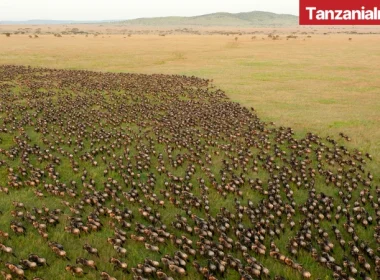
Tourism and hospitality contribute approximately 17% to Tanzania's GDP, with renowned attractions including Serengeti National Park, Mount Kilimanjaro, Zanzibar's beaches, and Ngorongoro Crater.
These attractions collectively drew over 2.29 million international arrivals in 2025[1].
The Government is actively promoting tourism diversification by developing lesser-known parks, expanding the country's product portfolio beyond its flagship destinations.
Complementary infrastructure investments include the modernization of Dar es Salaam and Kilimanjaro (Arusha) international airports and the ongoing rehabilitation of regional airports to support tourism and trade.
Technology Parks and Innovation Infrastructure
Under Accelerator 4 of the national transformation agenda focused on Science, Technology, and Innovation (STI), Tanzania is investing in research, local content development, innovation hubs, and technology parks.
The strategy strengthens collaboration between academia, research institutions, and industry, positioning technology parks as vehicles for commercialising R&D outputs.
Priority research domains include biotechnology, energy, agriculture, and health.
Policy Framework and PPP Financing
National Development Plan Alignment
The FY 2025/26 National Budget provides financing for flagship and strategic infrastructure projects identified in the National Development Plan, including industrial parks alongside transport corridors, energy generation and transmission, and ICT backbone expansion.
The plan prioritizes a competitive and inclusive economy through enhanced industrial production and service delivery, with a specific focus on strengthening manufacturing and developing industrial parks.
FYDP IV PPP Targets
Under FYDP IV, at least 50% of all large-scale construction and infrastructure projects are targeted to be implemented through alternative funding sources by June 2031, including the Tanzania Affordable Homes Program (TAHP) and the development of integrated industrial parks and SEZs.
Competitive policies will encourage PPPs in tourism infrastructure, sustainable practices, and service quality enhancement, extending the parks-based investment model into hospitality assets around national parks.
Textile and Agro-Processing Parks
The Plan targets the revival of defunct agricultural facilities such as the Urafiki and MWATEX mills to anchor integrated textile parks, and introduces tax credits for firms achieving international environmental certifications.
In agriculture and health, the focus is on developing agro-processing zones and incentivizing the local production of fortified foods.
Institutional Mandate
The National Development Corporation (NDC), the Government's primary strategic investment arm, prioritizes the development of large-scale industrial parks alongside mining and mineral processing, biotechnology, pharmaceuticals, agriculture, energy, and advanced manufacturing.
Investment Opportunities
Industrial park development offers investors access to fiscal and non-fiscal incentives spanning construction, operation and marketing phases inside the 34 registered SEZs and the 31 privately owned Industrial Parks[2].
Logistics and warehousing opportunities are anchored on the 1,000-hectare Kwala Dry Port industrial park, connecting SGR freight to regional landlocked markets.
Tourism opportunities exist in luxury lodges, eco-tourism, adventure tourism, and hospitality services, with a specific opening in the development of lesser-known parks under the Government's diversification strategy.
Agro-industrial park opportunities are concentrated in textile clusters (via the Urafiki and MWATEX revival), agro-processing zones, and fortified food production hubs.
Technology park opportunities span innovation hubs, R&D commercialisation, and TVET modernisation partnerships open to PPP structures.
Priority manufacturing niches within park settings include textiles, cement, steel, food processing, and pharmaceuticals, targeting rising domestic and export demand.
Last Update: May 2026
References
Want to know more about Parks in Tanzania? Our free overview of the Tanzania Business and Investment Guide 2026 covers Parks, plus key sectors and investment opportunities. The complete 141-page edition includes policies, taxation, key regulations, full macroeconomic data, and sources, and is also available at no cost upon completion of a short form.
Download Free OverviewGet the Full Edition for Free