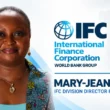


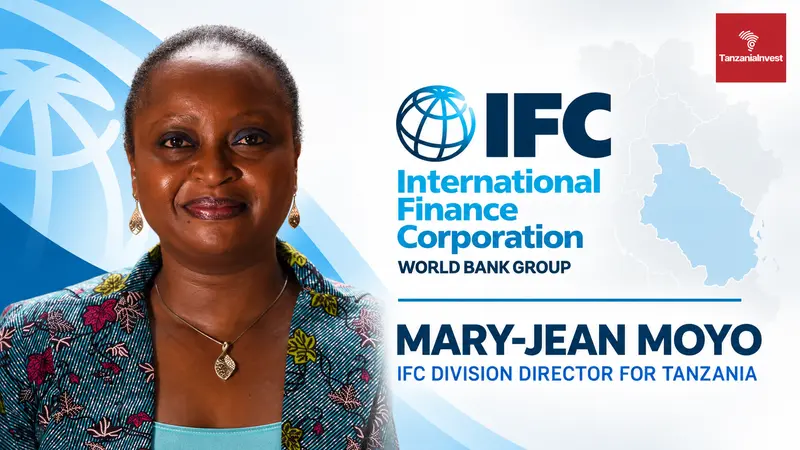
The World Bank Group has appointed Mary-Jean Moyo as the new International Finance Corporation (IFC) Division Director for Tanzania, Burundi, the Democratic Republic of Congo, Malawi, Zambia, and Zimbabwe, effective September 1, 2026, with Moyo based in Dar es Salaam.
A Zimbabwean national, she brings extensive experience in development finance, private sector investment, commercial banking and institutional leadership gained across Africa, Latin America and the Caribbean, and the Middle East.
In her new role, Moyo will oversee IFC’s engagement across the six countries, helping to advance an integrated approach to mobilizing private sector investment and supporting businesses to create more and better jobs for sustainable and inclusive growth in the region.

She most recently served as Chief of Staff to the Managing Director of IFC, following a role as IFC’s Regional Industry Director for Manufacturing, Agribusiness and Services in the Middle East and Africa.
In that role, Moyo supported the delivery of key business and development impact targets, with a focus on financial sustainability and scaling up investments in countries eligible for International Development Association (IDA) support and in fragile and conflict-affected situations.
Before joining IFC, Moyo worked with commercial banks in Zimbabwe and the central bank in Botswana, and held a position as Vice President for Financial Institutions at pan-African private equity funds.
She holds a master’s degree in Banking and Finance from the University of Wales and a bachelor’s degree in Economic History from the University of Zimbabwe.
Her appointment reinforces the World Bank Group’s commitment to working as one institution in support of country priorities, combining public sector policy and investment support with IFC’s private sector expertise, financing and advisory services.

The approach aims to create conditions for sustainable, inclusive and private-sector-led growth while advancing the World Bank Group’s jobs agenda and its mission to end poverty on a livable planet.
“Across East Africa, there is significant opportunity to unlock private investment, strengthen businesses, and create more and better jobs,” said Moyo.
“I am delighted to return to the region and to be based in Dar es Salaam as we deepen our partnerships with governments, the private sector, and development partners,” she added.
“Together, we can help mobilize capital, support entrepreneurship and innovation, and drive inclusive and sustainable growth that delivers tangible benefits for people across the region,” she noted.
IFC’s Private Sector Investment Portfolio in Tanzania
IFC’s investment pipeline for Tanzania for the 2026 and 2027 fiscal years stands at USD 864 million, with an outstanding committed portfolio of USD 307 million spanning financial services, agribusiness, light manufacturing and tourism.
In June 2026, IFC issued its first offshore Tanzanian shilling-denominated bond, raising TZS 262.5 billion (USD 100 million equivalent) through a five-year note carrying a 7.60% coupon and listed on the London Stock Exchange.
The AAA-rated bond, placed with European institutional investors, channels its proceeds into a loan to NMB Bank (DSE: NMB) to expand financing for micro-, small-, and medium-sized enterprises across Tanzania, with 20% of the funds ring-fenced for women-owned businesses.
The World Bank estimated the bond’s proceeds would support between 13,000 and 20,000 jobs at Tanzanian micro, small and medium-sized enterprises.
Want to know more about Finance in Tanzania? Our free overview of the Tanzania Business and Investment Guide 2026 covers Finance, plus key sectors and investment opportunities. The complete 141-page edition includes policies, taxation, key regulations, full macroeconomic data, and sources, and is also available at no cost upon completion of a short form.
Download Free OverviewGet the Full Edition for Free