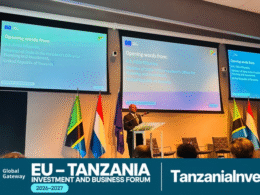


The Citizen newspaper has just published its interview with the President of Tanzania, H.E. Samia Suluhu Hassan, in which she discusses, after one year in office, her administrations’ strategy and efforts to attract foreign investment and promote socio-economic development.
President Samia reminded that the focus of the government is to build investors’ confidence, by creating a conducive business environment.
The strategy behind this exercise is spelled in the “Blueprint for Regulatory Reforms to Improve the Business Environment in Tanzania,” which was approved by the government in 2017 and adopted by a wide array of stakeholders, including the private sector and development partners.

This requires, among other things, to cut the time taken by investors to complete legal and procedural requirements to start operations in the county, which has been reduced from six to two months.
The government also got rid and/or reduced some of the taxes and promoted a friendly working environment during tax collections.
However, President Samia acknowledged that the speed of the implementation of the Blueprint is still unsatisfactory. And boosting the country’s agriculture through irrigation and promoting livestock and fisheries has been one of her administration’s priority areas.
Agriculture
First, the government must take action on revising the irrigation commission system, and secondly, emphasize irrigation fanning across the country.
“Covid-19 outbreak has changed the global economy, with crops previously considered as major food merchandises have turned to be traded as cash crops, hence the reason my government is putting more emphasis on increasing crop production,” President Samia stressed.

Simultaneously, her administration has provided, in the preceding fanning season, cotton and cashew nut farmers with agricultural inputs subsidies with plans to extend the benefits to coffee farmers as well.
As a result “we have seen increased production in various crops, forcing the government to initiate talks with commercial banks and international organizations in order to further support these initiatives.“
Skills Education
President Samia shared her vision to transform Tanzania’s education system since there have been concerns over years spent by children in school and the quality of skills acquired upon graduation.
That is why the government has decided to move on to skills education, instead of academics only, which means that even if a child fails to continue with tertiary level of education, he/she can know where to head and find their own life path.
For this, they will build vocational institutions in every district, as well as build a big digital hub that will enhance learning and later tap opportunities resulting from the digital world.
Tourism
President Samia reminded that, although Tanzania started with low-level tourists, this has changed and improved through increasing services and the status of national hospitality service to cater for higher-end tourists.
“We focus on building top hotels to attract high-end tourists who will spend a lot in the country, but at the same time, we attract those from lower levels to continue coming because we have hotels that they can afford.”
Furthermore, she stressed the untapped potential represented by domestic tourists: “if we create a conducive environment for citizens to visit their own attractions, the sector will grow and prosper.”
Want to know more about Agriculture in Tanzania? Our free overview of the Tanzania Business and Investment Guide 2026 covers Agriculture, plus key sectors and investment opportunities. The complete 141-page edition includes policies, taxation, key regulations, full macroeconomic data, and sources, and is also available at no cost upon completion of a short form.
Download Free OverviewGet the Full Edition for Free