
According to a recent report by The Guardian, the executive director for the Tanzania Investment Centre (TIC), Emmanuel Naiko, has indicated that the authorities throughout the country have requested that each of the regions put in place competitive structures to help facilitate the flow of investment, while at the same time allowing for the even distribution of Foreign Direct Investments (FDI) in the country.
Mr. Naiko went on to explain that, in order to create a permanent solution to the current problem of the continued concentration of FDIs in some of the country’s regions, each of the regional authorities would have to ensure that the proper environments were put in place for investors.
In addition, Mr. Naiko said that the regions should become accustomed to competing amongst themselves for investment attraction by removing bureaucratic procedures in their respective areas.
“Regional authorities should do away with red tape when allowing foreign and local investment to thrive alongside creation of the much needed job opportunities,” he said.
Recently, Tanzania has been displaying an uneven distribution of investment as a result of the flow of FDI, approximately 75 percent of which is diverted to projects in Dar es Salaam, Arusha, Mwanza and Mbeya.

According to the 2008 World Investment Report, FDI in Tanzania increased by almost 15 percent in one year as a result of investments in natural resources exploration projects that had already been in operation.
Figures from the report indicated that the overall FDI increased from USD 522 million in 2006 to USD 600 million in 2007.
Nevertheless, in spite of these figures Mr. Naiko said that poor infrastructure and bureaucracy within the country were obstacles to enhancing the even distribution of investments to the regions.
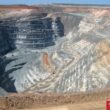
He went on to cite the lack of reliable power supply in many regions as having an effect on the extraction of minerals, while at the same time discouraging new investments.
Nickel reserves, which have been discovered in Kabanga in the Kigoma Region, have potential to serve as a source to attract foreign investors to the country.

However, in order to increase the inflow of foreign investment, the government has had to address several impeding factors such as carelessness and the slow implementation of investment policy reforms.
According to Mr. Naiko, the TIC has begun working on various programs whose aim is to provide assistance to regional authorities with the identification and improvement of investment opportunities in their respective areas.
Mr. Naiko went on to say that ideally the regions should be able to facilitate, strengthen and expand business partnerships between transnational companies and small and medium enterprises (SMEs).
Want to know more about Trade in Tanzania? Our free overview of the Tanzania Business and Investment Guide 2026 covers Trade, plus key sectors and investment opportunities. The complete 141-page edition includes policies, taxation, key regulations, full macroeconomic data, and sources, and is also available at no cost upon completion of a short form.
Download Free OverviewGet the Full Edition for Free