

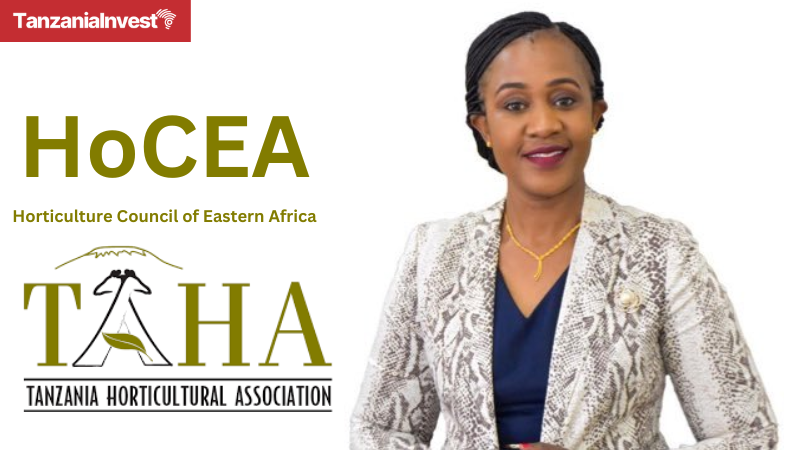
The Horticulture Council of Eastern Africa (HoCEA) has been officially launched to drive growth and address challenges in the region’s horticultural sector.
These include market access, pests and diseases, logistics, financing, climate change, and compliance.
The council aims to enhance East Africa’s global competitiveness through strategic initiatives and regional collaboration.

Tanzania’s Jacqueline Mkindi, CEO of the Tanzania Horticultural Association (TAHA), has been appointed as the council’s first Chairperson. This appointment highlights Tanzania’s leadership role in advancing the horticultural industry.
TAHA is a key organization representing Tanzania’s horticultural sector, contributing to the country’s agricultural growth.
HoCEA’s leadership team also includes Clement Tulezi, CEO of the Kenya Flower Council, as Secretary, and Esther Nekambi, Executive Director of the Uganda Flower Exporters Association, as Treasurer.
Together, they will guide the council’s mission to address industry-wide challenges and unlock opportunities.
The council’s key objectives include developing a regional quality mark and branding strategy, monitoring plant health, improving market access, and enhancing logistics for better supply chains.

These initiatives aim to position East Africa as a competitive player in the global horticultural market.
“With strong leadership and focus, we are set to improve competitiveness,” Ms. Mkindi stated during the announcement in Arusha.
The launch of HoCEA aligns with the East African Community (EAC) Secretariat’s Fruits and Vegetables Value Chain Strategy for 2021-2031.
The strategy seeks to increase intra-EAC trade from US$ 10 million to US$ 25 million and boost global exports to US$ 1.3 billion by 2031. Horticulture currently contributes between 20% and 36% of the region’s GDP, demonstrating its economic relevance.
The establishment of HoCEA brings together key players in East Africa’s horticultural sector under a unified agenda, with a focus on addressing challenges and pursuing shared opportunities for growth.
Want to know more about Agriculture in Tanzania? Our free overview of the Tanzania Business and Investment Guide 2026 covers Agriculture, plus key sectors and investment opportunities. The complete 141-page edition includes policies, taxation, key regulations, full macroeconomic data, and sources, and is also available at no cost upon completion of a short form.
Download Free OverviewGet the Full Edition for Free