
The President of the Democratic Republic of the Congo (DRC), Félix Tshisekedi, announced that the DRC has begun preparations to build a dry port in Dar es Salaam to streamline the handling of Congolese cargo moving through Tanzania’s main gateway to international markets.
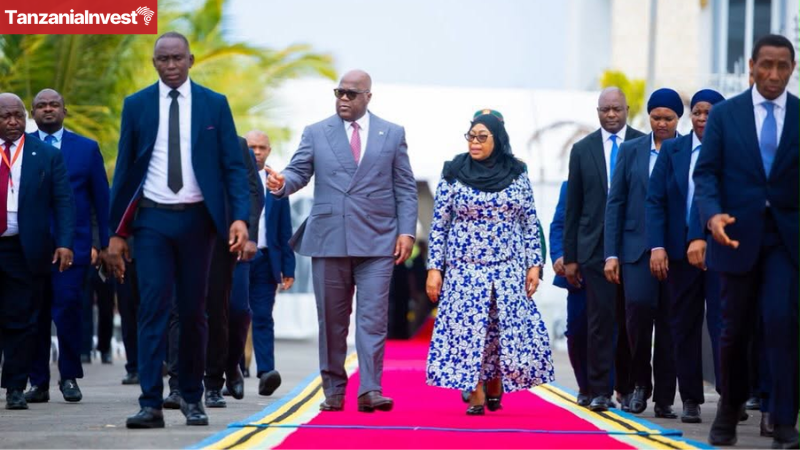
The announcement came as Tanzania and the DRC agreed on 18 August 2026 to accelerate the implementation of transport projects connecting the two countries, during talks at the Zanzibar State Lodge between the President of the United Republic of Tanzania, Dr. Samia Suluhu Hassan, and Tshisekedi, who is visiting Tanzania at Samia’s invitation.
Samia stressed the importance of strengthening rail and road networks, port services, and water transport linking the Port of Dar es Salaam with DRC production areas through Lake Tanganyika during the talks.

“Our goal is to make it easier to transport goods between Tanzania and the DRC by improving transport infrastructure and services, reducing time and costs, and in turn increasing trade and investment between our two countries,” Samia said.
The DRC ranks among the largest users of Tanzania’s ports, with approximately 7.2 million tonnes of cargo passing through them in 2023.
Samia welcomed the DRC’s construction of a 450-kilometre road linking Manono to the Port of Kalemie, alongside improvements to the port, saying the projects will help strengthen trade and investment through the Central Corridor.
She added that Tanzania is continuing to upgrade its ports on Lake Tanganyika, increase its number of vessels, and expand its railway network westwards to ease the transport of goods to the DRC and other neighbouring countries.
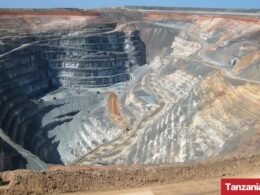
The two leaders also discussed expanding cooperation in communications, energy, and mining, with Samia calling on both countries to collaborate on mineral extraction, value addition, research, and marketing to increase the benefits derived from their mineral resources.

Samia invited the DRC to join the African Minerals and Geosciences Centre (AMGC), a Dar es Salaam-based institution, to collaborate on research, exchange expertise, and promote productive investment in the mining sector.
Tanzania also expressed readiness to expand trade with the DRC in agricultural, livestock, and fisheries products, as well as to provide specialised medical services and conduct medical camps in the country.
On peace and security, Samia said Tanzania will continue to support the DRC’s efforts to restore peace and stability in the eastern part of the country.
For his part, Tshisekedi explained that the dry port would provide customs services, maritime cargo handling, mineral certification, and quality control for Congolese goods passing through the Port of Dar es Salaam.
“We want to make trade between our countries easier. The construction of a dry port in Dar es Salaam will help improve the handling and transportation of DRC cargo passing through Tanzania,” Tshisekedi said.
Tshisekedi added that the DRC is considering expanding Air Tanzania flights to the country, a move aimed at increasing travel, tourism, trade, and people-to-people exchanges between Tanzania and the DRC.
He further stressed the importance of Africa processing its minerals within the continent to add value, build production value chains, and create jobs for young people.
“Africa should add value to its resources within the continent. This will enable us to build production value chains, increase the benefits from our resources and create more jobs for our young people,” Tshisekedi said.
Tanzania-DRC Relations
Tanzania and the DRC have longstanding diplomatic, economic, and social relations, and both countries are members of the East African Community (EAC) and the Southern African Development Community (SADC), providing a platform for deeper regional cooperation.
Tanzania’s geographical position makes it a strategic gateway connecting the DRC to the Indian Ocean and international markets, while the DRC, with a population of more than 100 million people and significant natural resources, is one of the major markets in East and Central Africa.
Want to know more about Mining in Tanzania? Our free overview of the Tanzania Business and Investment Guide 2026 covers Mining, plus key sectors and investment opportunities. The complete 141-page edition includes policies, taxation, key regulations, full macroeconomic data, and sources, and is also available at no cost upon completion of a short form.
Download Free OverviewGet the Full Edition for Free