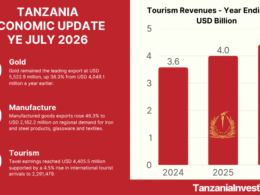


According to the recently released Bank of Tanzania (BoT) economic review for the month of January has indicated that, in spite of regular power cuts early on in the year, the Tanzania manufacturing sector has continued to be successful.
Tanzania was mostly impacted by a period of unreliable electrical power in early January of this year when power rationing throughout the country was extended due to a drought that lasted longer than anticipated and ultimately led to a deficit of more than 200-megawatt on the national power grid.
In spite of the country’s electrical concerns, the BoT reported that the value of manufactured goods within the country increased from USD 963.9 million during the previously recorded period to USD 994.4 for this period.

According to the report, much of the increase in the country’s manufactured goods was recorded in the area of vegetable oils, paper and plastic products.
Mr. Mtemi Laurence, the Executive Director of the Tanzania Exporters Association (TANEXA), is reported to have spoken recently concerning the high demand of local Tanzanian made goods in the surrounding East African countries.
“There is high demand of Tanzania’s goods in the East African Community and the Southern Africa Development Community despite many factories producing below capacity due to power blackouts,” said the Executive Director.
Mr. Laurence went on to indicate that the country’s manufacturing sector has performed so well as a direct result of the government intervention on the power crisis within the country.
The central bank report, on the other hand, indicated that gold exports maintained their dominancy because of their increase in price from USD 994.3 to an average of USD 1,244.6 per troy ounce.

Overall, the total value of goods and services was 25.7 percent higher than during the previous year amounted to approximately USD 6,086.5 million.
In addition, the total value of the country’s traditional exports was reportedly 22.4 percent greater this year than during the previous year as a result of a significant increase both in the volume of the exports as well as the price per unit of tobacco and cashew nuts.
According to the same report, the country’s non-traditional exports increased from USD 2,471.5 million to USD 3,296.4 million USD.
In addition to the country’s manufacturing and export sectors, the Tanzania travel sector was also successful during this reporting period, increasing from USD 1,302.6 million USD to USD 1,312.6 million.
Want to know more about Industry in Tanzania? Our free overview of the Tanzania Business and Investment Guide 2026 covers Industry, plus key sectors and investment opportunities. The complete 141-page edition includes policies, taxation, key regulations, full macroeconomic data, and sources, and is also available at no cost upon completion of a short form.
Download Free OverviewGet the Full Edition for Free