

Tanzania’s agriculture sector grew at a rate of 3.2% in Q2 2016, reaching TZS3.8tn, compared to TZS2.5tn in Q2 2015.
The results were included in a report recently issued by the Tanzanian National Bureau of Statistics (NBS), covering the country’s GDP performances Q2 2016 GDP.
NBS attributes the growth in the agricultural sector to favorable rainfall in most production areas and farmers education.

Tanzania Agriculture Growth Breakdown
Tanzania’s crop production increased at a rate of 3.4% in Q2 2016. The crop production growth was mainly attributed to maize, paddy, sorghum, beans, round potato.
Maize production went up by 35.3%, from 1,054t in Q2 2015 to 1,426t in Q2 2016, paddy increased by 47.6% from 775t to 1,144t, sorghum by 14.4%, from 410t to 469t, beans by 74.8% from 266t to 465t, and round potato by 38.1%, from 134t to 185t.
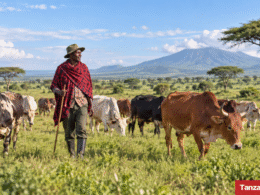
Tanzania’s livestock production recorded a growth rate of 2.5% in Q2 2016 thanks to an increase in livestock sold for slaughter and animal products such as milk and skin and hides.
Forestry registered a growth rate of 3.7% in Q2 2016 due to following a sustainable harvest of forest products.
Fishing in Tanzania grew at a rate of 3.6% in Q2 2016 thanks to a rise in fish catch during the period.

Tanzania Agriculture
Agriculture is Tanzania’s economy mainstay, contributing nearly 30% to its GDP and 67% to total employment.
Agricultural land in Tanzania was last measured at 396,500sq.km in 2013 (45% of total land area) versus 369,744sq.km in 2008, representing an increase of 7% over the 5–year period.
Want to know more about Agriculture in Tanzania? Our free overview of the Tanzania Business and Investment Guide 2026 covers Agriculture, plus key sectors and investment opportunities. The complete 141-page edition includes policies, taxation, key regulations, full macroeconomic data, and sources, and is also available at no cost upon completion of a short form.
Download Free OverviewGet the Full Edition for Free