


The Monetary Policy Committee (MPC) of the Bank of Tanzania (BOT) met on the 6th June of 2022 to assess the conduct of monetary policy in March and April 2022, the recent global and domestic economic situation.
The Committee was satisfied with the implementation of monetary policy and the outcome thereof.
Liquidity in banks remained adequate and interbank interest rates stabilized at low levels, creating a favorable environment for lending to the private sector at an affordable cost.

The MPC observed that since its last meeting in March 2022, the global economy continued to face challenges of rising inflation, high commodity prices, resurgence of Covid-19, and supply-chain disruptions caused by the war in Ukraine and sanctions on Russia.
The challenges have increased risks to the recovery of global and domestic economic activities.
Domestic economic activity was satisfactory in 2021, growing at 4.9% compared with the target of 5% in Tanzania Mainland, and 5.1% in Zanzibar compared with the target of 5.2%.
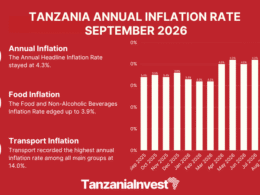
Inflation was higher in 2021/22 than in the preceding year, due to rising commodity prices, especially oil and consumer goods.
Money supply expanded in line with the target, bolstered by accommodative monetary policy and improving business conditions.

Private sector credit growth was 13.4%, consistent with the target of at least 10.6%; and fiscal operations were on track, with revenue collection recovering consistent with economic activities and improved tax compliance.
The external sector faced global challenges, but foreign exchange reserves remained adequate at around USD 5.5 billion.
The exchange rate was stable, depreciating gradually by less than one percent, year-on-year.
The MPC also took note of the passing of the Foreign Exchange Regulations, 2022, in May, which permits residents of SADC countries, in addition to those in EAC, to participate in government securities.
The Regulations also permit Tanzania residents to invest in SADC countries without seeking waiver from the Bank of Tanzania. This is expected to increase the investor base and competition in the government securities market.
Based on the assessment of the current and future macroeconomic situation, the MPC approved the Bank of Tanzania to sustain accommodative monetary policy in May and June 2022, in order to continue safeguarding the recovery of economic activities.
Want to know more about the Economy in Tanzania? Our free overview of the Tanzania Business and Investment Guide 2026 covers the Economy, plus key sectors and investment opportunities. The complete 141-page edition includes policies, taxation, key regulations, full macroeconomic data, and sources, and is also available at no cost upon completion of a short form.
Download Free OverviewGet the Full Edition for Free