



The Bank of Tanzania (BOT) has released a statement following its 227th Ordinary Meeting of the Monetary Policy Committee (MPC) on 31st August 2023.
The statement provides insights into the nation’s economic trajectory and the effectiveness of its monetary policies.
The document explains that the less accommodative monetary policy implemented by the MPC successfully contained liquidity within desired levels.

It also highlights a significant increase in credit to the private sector, which has been a driving force behind Tanzania’s robust economic growth this year.
This surge in private sector credit, recording a growth of 21.2%, exceeded the target of 10.7%.
The increase in demand for loans, reflecting an overall improvement in the business environment, is attributed to this uptick.
Global and Tanzanian Economic Performances
On the global front, the economy is on a recovery path, with a projected growth rate of 3% for 2023, up from the earlier 2.8%. This positive global landscape offers a favorable environment for further economic activities in Tanzania.
Domestically, Mainland Tanzania reported a GDP growth of 5.6% for the first quarter of 2023, primarily driven by agriculture, construction, and mining sectors.

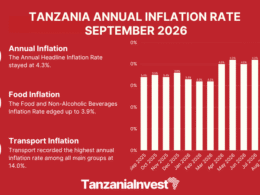
Inflation has been declining, with Mainland Tanzania witnessing a drop to 3.3% in July 2023 from 4.9% in January 2023.
The Tanzanian economy experienced challenges with foreign exchange, particularly the USD, due to global shocks.
However, with foreign reserves amounting to USD 5,338.9 million in July 2023, sufficient to cover about 4.8 months of projected imports, and measures to increase the foreign exchange supply, the situation is expected to improve.
The banking sector remains liquid and adequately capitalized, with a notable decrease in the non-performing loans (NPLs) ratio to 5.3% in June 2023 from 7.8% in June 2022. This trend is expected to motivate banks to increase lending to the private sector, supporting further economic growth.
In light of these observations, the MPC decided to maintain the less accommodative monetary policy stance.
Monetary policy measures will be implemented to align liquidity with the foreign exchange demand, aiming to facilitate the attainment of the targets under the Extended Credit Facility Program for the quarter ending September 2023.
BOT stresses that the MPC’s decisions and the country’s economic indicators paint an optimistic picture for investors and the Tanzanian business community. The surge in private sector credit and the supportive monetary policies signal a promising trajectory for Tanzania’s economic future.
Want to know more about Banking in Tanzania? Our free overview of the Tanzania Business and Investment Guide 2026 covers Banking, plus key sectors and investment opportunities. The complete 141-page edition includes policies, taxation, key regulations, full macroeconomic data, and sources, and is also available at no cost upon completion of a short form.
Download Free OverviewGet the Full Edition for Free