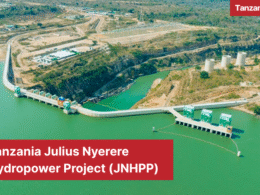


The Government of Tanzania and the French Development Agency (AFD) recently signed a complementary financing agreement of EUR 34.86 million equivalent to approximately TZS 96.47 billion for the construction project of the Kakono power plant.
The agreement was signed in Dodoma by the Permanent Secretary of the Ministry of Finance, Dr. Natu El-maamry Mwamba, and the Director of the French Development Agency in Tanzania, Mrs. Celine Robert.
Dr. Mwamba explained that the project, which is expected to be completed in 2026 and handed over to the Government in 2028, will add 87.8 megawatts of electricity to the national grid, thus increasing the production of cheap hydroelectric power to deal with the shortage of electricity in the national grid in the North West of Tanzania.

This project is funded by three development partners: the AFD (EUR 110 million equivalent to approximately TZS 304.37 billion), the African Development Bank (USD 161.47 million equivalent to approximately TZS 413.95 billion), and the European Union (EUR 34.86 million equivalent), with the additional TZS 96.47 to be managed by AFD which were signed today.
This new additional financing will support the implementation of the Environmental and Social Management Plan as well as the infrastructures associated with the hydropower plant.
Dr. Mwamba also said that the Kakono Hydroelectricity Project is in line with the Third Five-Year National Development Plan (FYDP III) with the theme of building a competitive economy and industry for the development of the people by improving productive infrastructure, access to reliable energy, strengthening business and investment, enabling environment as well as education and training systems.
In addition to supplying electricity to consumers, the project is also expected to provide approximately 1,000 job opportunities during the implementation phase as well as 100 permanent jobs during the operational phase and thus stimulate the economic growth of the people around the project and improve their lives.
For her part, the Director of AFD in Tanzania, Mrs. Robert, said that the project is in line with international climate goals and will help the country in reducing the level of carbon in the energy sector.

“This project is expected to have great results in the economic development of this rapidly growing area, which is in the middle of the Great Lakes region, to promote the industrial economy and stimulate growth not only in Tanzania but also in neighboring countries,” she added.
For his part, the Deputy Permanent Secretary of the Ministry of Energy, Dr. James Mataragio stresses that the Ministry, through the Tanzania Electric Supply Company (TANESCO), will ensure that the project is implemented effectively and reaches the intended goals.
Dr. Mataragio also congratulated the AFD for continuing to collaborate with Tanzania in implementing various energy projects funded by the organization including the Kishapu Solar Power Project and the Mafia Solar Power Project.
The Kakono Hydropower Project
Kakono comprises an 88 MW plant with an associated transmission line on the Kagera River, approximately 90 kilometers west of Bukoba Municipality, in the Lake Region in the northwest of Tanzania.
The Kakono plant will increase the energy injected into the interconnected grid and will have a stabilizing impact on the grid.
On 14th March 2023, the Government of Tanzania signed concessional loan agreements with the African Development Bank (AfDB) and the French Development Agency (AFD) to finance the Kakono Hydroelectricity Project.
The Lake Region where the plant will be located is a highly productive area for the export of minerals and fish, and is in need of cheap and reliable electricity as opposed to the use of diesel-generated power which is expensive and unreliable.
Want to know more about Energy in Tanzania? Our free overview of the Tanzania Business and Investment Guide 2026 covers Energy, plus key sectors and investment opportunities. The complete 141-page edition includes policies, taxation, key regulations, full macroeconomic data, and sources, and is also available at no cost upon completion of a short form.
Download Free OverviewGet the Full Edition for Free