


The United States has issued a serious warning to Tanzanian authorities regarding delays in finalizing negotiations for the country’s lucrative liquefied natural gas (LNG) project.
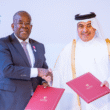
In a recent visit to Dar es Salaam, US Deputy Assistant Secretary of State Joy Basu emphasized the urgent need for progress, cautioning that prolonged delays could lead to investor withdrawal.
According to The East African newspaper, Basu highlighted the growing impatience among major stakeholders, including Exxon Mobil, Shell, and Equinor, with the slow pace of negotiations. Initially estimated at USD 30 billion in 2014, the LNG project now carries a price tag of USD 42 billion.

Basu pointed out that LNG projects are becoming more common globally, and the window of opportunity for Tanzania’s investment is closing rapidly. “There is LNG in lots of places around the world now, and for Tanzania, the window for this particular investment is closing fast. Such windows do not remain open forever,” she stated.
Despite earlier indications of advancement, negotiations seem to have reached an impasse, with no official updates since March last year.
Basu’s meetings with Tanzanian government officials centered on the critical importance of expediting negotiations to avoid investor disillusionment. She emphasized the potential consequences of prolonged delays, including erosion of investor trust and confidence in Tanzania’s investment climate.
Tanzania’s LNG Project
The Tanzania Liquefied Natural Gas Project, or the Tanzania LNG Project, is a planned liquefied natural gas (LNG) processing plant to be located in the Indian Ocean, opposite Tanzania’s main offshore gas exploration sites.
Tanzania has proven natural gas reserves of 57 trillion cubic feet, with at least 49.5 trillion cubic feet (Tcf) of those reserves far offshore in the Indian Ocean.

The Ministry of Energy of Tanzania first announced its intention to develop an LNG plant in Tanzania in 2014.
The project involves the Tanzania Petroleum Development Corporation (TPDC) and the Government of Tanzania together with a number of international energy companies active in the country including Equinor, Shell, ExxonMobil, Pavilion Energy, and Ophir Energy
In 2019, Tanzania’s late President John Magufuli ordered to suspend talks with the foreign investors to review of the country’s gas production sharing agreement (PSA) signed in 2007 by Equinor with TPDC.
In February 2021, Equinor decided to write down the book value of its Tanzania LNG Project on the company’s balance sheet by USD 982 million as the overall project economics have not yet improved sufficiently to justify keeping it on the balance sheet.
In April 2021, President Samia Suluhu Hassan commented on the LNG project during the swearing-in of the permanent secretaries, stressing the need to expedite the project, and in November 2021 she resumed negotiations with investors.
In June 2022, the Ministry of Energy of Tanzania and TPDC signed a framework agreement with Equinor and Shell to pave the way for the construction of the LNG export terminal.
Finally, in March 2023, the Minister of Energy of Tanzania Hon. January Makamba announced that the negotiations on the LNG project with Shell and Equinor have been completed and agreements are being drafted.
However, there has been no official update since then.
Want to know more about Energy in Tanzania? Our free overview of the Tanzania Business and Investment Guide 2026 covers Energy, plus key sectors and investment opportunities. The complete 141-page edition includes policies, taxation, key regulations, full macroeconomic data, and sources, and is also available at no cost upon completion of a short form.
Download Free OverviewGet the Full Edition for Free