

A significant financial boost for Tanzanian businesses has been announced, combining a €15 million grant from the European Union (EU) with up to €350 million in credit lines from the European Investment Bank (EIB).
This combined €365 million package aims to bolster Small and Medium-Sized Enterprises (SMEs) under the EU Global Gateway strategy, with a particular focus on women-led businesses and the blue economy sector.
Out of the €350 million, the EIB has already signed agreements worth €270 million with three banks: CRDB (€150 million), NMB (€100 million), and KCB Tanzania (€20 million). The remaining €80 million will be allocated to other financial institutions across Tanzania.

These financial intermediaries benefit from the EIB’s favorable financial terms, including longer tenures than are typically available in local markets.
Alongside the credit lines, EIB Global provides technical assistance to financial intermediaries and final beneficiaries to ensure successful project implementation, adding substantial value to the creation of sustainable enterprises.
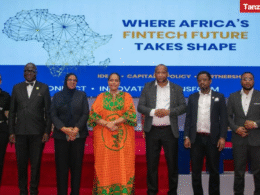
The European Investment Bank Vice-President, Mr. Thomas Östros, and the Deputy Ambassador of the European Union to Tanzania, Mr. Emilio Rossetti, have formalized their commitment through a signed statement of intent.
Focus on Women and the Blue Economy
The financing package will prioritize women-led businesses and the blue economy sector, which face significant challenges in accessing finance.
This effort aligns with the Tanzanian Government’s priority sectors and Sustainable Development Goals, under the EU’s Global Gateway investment strategy.

Mr. Thomas Östros emphasized the importance of small businesses in driving economic development and innovation in Africa. He highlighted the EIB’s role in addressing financing gaps at various business stages, fostering an efficient entrepreneurial ecosystem.
Mr. Emilio Rossetti highlighted the joint efforts with the EIB to enhance SME access to finance and promote financial inclusion for underserved groups, such as startups, youth, and women-led businesses. He reiterated that this initiative is part of the EU’s Global Gateway investments for Africa, aiming to create sustainable jobs.
About EIB and EU in Tanzania
The European Investment Bank (EIB) is the EU’s long-term lending institution, and the world’s largest multilateral bank. EIB Global, a specialized arm of the EIB Group, focuses on enhancing the impact of international partnerships and development finance under the Global Gateway strategy.
By 2027, EIB Global aims to support €100 billion of investment, fostering strong partnerships with development finance institutions and civil society under the Team Europe banner.
In 2023, the EIB confirmed its first new engagement in Tanzania after seven years, with EIB Global committed €270 million to support local businesses, marking the largest investment in any Sub-Saharan African country in 2023. This support has already reached over 10,000 beneficiaries, including more than 3,000 women-led enterprises and over 900 blue economy enterprises and cooperatives in Zanzibar.
The European Union (EU) has a significant presence in Tanzania, focusing on promoting sustainable development, economic growth, and regional stability.
Through the European Development Fund (EDF) and the Global Gateway initiative, the EU provides substantial financial assistance to Tanzania, supporting projects in infrastructure, health, education, and agriculture. These initiatives aim to reduce poverty and align with Tanzania’s developmental priorities by boosting smart, clean, and secure links in digital, energy, and transport sectors.
Want to know more about Finance in Tanzania? Our free overview of the Tanzania Business and Investment Guide 2026 covers Finance, plus key sectors and investment opportunities. The complete 141-page edition includes policies, taxation, key regulations, full macroeconomic data, and sources, and is also available at no cost upon completion of a short form.
Download Free OverviewGet the Full Edition for Free