

According to a recent report in The Guardian, the Japanese government has recently shown a desire to begin following similar strategies in Africa that were responsible for assisting several Asian countries establish strong economies.
In order to accomplish these strategies, the government of Japan is seeking to increase the level of direct investment in Africa, a strategy which could help to boost the Tanzania investment climate.
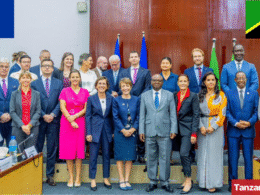
Recently, the Ambassador of Japan to Tanzania, Hiroshi Nakagawa, spoke with the IPP Executive Chairman, Reginald Mengi saying that his tour of duty in the African country would be used to help promote and sell Tanzania as a destination to Japanese investors, thus helping to strengthen the long-lasting relationship between the two countries.
“Japan views Tanzania as a rare and exemplary model of a stable society where peace and stability are guaranteed,” said Ambassador Nakagawa, “Tanzania can make strong proposals on areas of investment and economic cooperation ranging from agriculture to ports, roads, water projects and others.”

Ambassador Nakagawa went on to suggest that the economic objectives of Tanzania be initiated in phases beginning with simple, high-quality products and then slowly progress towards the production of goods that have been designed for a more specific niche market group.
According to Mr. Mengi, who is also the chairman of the East African Business Council, Japan can serve as an example for Tanzania in that most of its current wealth and prosperity is a result of a knowledge-based economy.
“I commend Japan for its economic achievements that have resulted from the people’s determination to give things a try,” said Mr. Mengi, “Today Japan has captured much of the global market [and] it is possible for our country to come to that level too and to start producing high-tech products, but we need to train our people.”
In an interview with The Guardian, Mr. Mengi suggested that Tanzania follow Japan’s example and prioritize the transfer of technology by sending their students out to learn from other cultures and places.
Mr. Mengi went on to say that, while the current global economic crisis had, indeed, reduced the demand from foreign investors for raw materials, it should not serve as a hindrance to technological advancement.

“The global economic downturn should serve as a wake-up call to the world, especially developing nations. Here in Tanzania the situation is a challenge to make us think more deeply about ways to realize sustainable socio-economic freedom and prosperity for the people,” said Mr. Mengi, “It is possible to make Tanzania an investment destination.”
Want to know more about Trade in Tanzania? Our free overview of the Tanzania Business and Investment Guide 2026 covers Trade, plus key sectors and investment opportunities. The complete 141-page edition includes policies, taxation, key regulations, full macroeconomic data, and sources, and is also available at no cost upon completion of a short form.
Download Free OverviewGet the Full Edition for Free