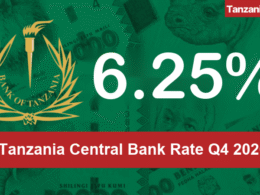


The Monetary Policy Committee (MPC) of the Bank of Tanzania (BOT) held its 215th Ordinary Meeting on 23rd July 2021 to discuss the recent conduct of monetary policy, economic performance, and outlook thereof.
The MPC was satisfied with the conduct of monetary policy in May and June 2021, which succeeded to sustain adequate liquidity in banks and stabilize money market interest rates at low levels. This creates favorable conditions for an increase in bank lending to the private sector and reduces the interest rate on loans.
As regards the domestic economy, the MPC observed that the improving global economic environment will provide great impetus to the recovery of economic activities, particularly those directly linked with the global economy.

Inflation remained low, within the target range of 3-5%, and the risk to inflation outlook is moderate, notwithstanding the recent rise of global oil prices.
Foreign exchange reserves were adequate and consistent with country and East African Community (EAC) benchmarks, hence contributing to the stability of the exchange rates. The MPC underscored the need to continue diversifying export markets and improve value addition.
The MPC observed slow uptake of loans by the private sector in 2020/21, partly attributable to the negative effects of COVID-19 on businesses. The MPC noted that improving the global economy, executing additional measures by the Bank of Tanzania intended to create conditions for reducing interest rates on loans and promoting credit intermediation as well as ongoing measures to improve the business environment are expected to provide impetus to increase loans to the private sector.
Against this backdrop, the MPC maintained the decision of expanding the money supply with the following policy measures, with effect from 27th July 2021:
(i) Reduction of statutory minimum reserve requirement (SMR). A bank that extends credit to agriculture shall be eligible for a reduction in SMR amount, equivalent to the loan extended. In addition, a bank shall be required to submit evidence of lending to agriculture at an interest rate not exceeding 10% per annum. This measure intends to increase lending to agriculture, which is the mainstay of Tanzanians. It also aims to reduce the interest rates on loans to agriculture.

(ii) Relaxation of agent banking eligibility criteria. The Bank of Tanzania has removed the regulatory requirement of business experience of at least 18 months for applicants of agent banking business. Instead, applicants for agent banking business shall be required to have a National ID Card or National ID Number. This policy measure is expected to contribute to increasing loanable funds to banks through deposit mobilization. The measure also intends to lower lending rates.
(iii) Limitation of the interest rate paid on mobile money trust accounts. Mobile money trust account balances held with banks shall be eligible to interest rates not exceeding the rate offered on savings deposit account by the respective bank. This will contribute to lowering the cost of funds to banks, thus helping to reduce lending rates.
(iv) Introduction of special loan amounting to TZS 1.0 trillion to banks and other financial institutions for on-lending to the private sector. The Bank of Tanzania shall provide a special loan to banks and other financial institutions at 3% per annum for pre-financing or re-financing of new loans to the private sector. A bank wishing to access the special loan facility shall be required to charge an interest rate not exceed 10% per annum on loans extended to the private sector. This measure intends to increase liquidity to banks and reduce lending rates.
(v) Reduction of risk weight on loans. The Bank of Tanzania shall reduce risk weight on different categories of loans in the computation of regulatory capital requirements of banks. This measure will provide an opportunity for banks to extend more credit to the private sector than before.
In addition to these measures, the Bank of Tanzania has directed banks and other financial institutions to implement strategies of lowering lending rates and increasing deposit mobilization.
Want to know more about Banking in Tanzania? Our free overview of the Tanzania Business and Investment Guide 2026 covers Banking, plus key sectors and investment opportunities. The complete 141-page edition includes policies, taxation, key regulations, full macroeconomic data, and sources, and is also available at no cost upon completion of a short form.
Download Free OverviewGet the Full Edition for Free