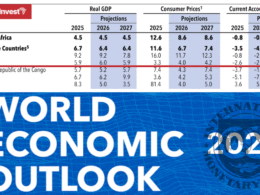


The African Development Bank (AfDB) has recently released its African Economic Outlook 2019 report, estimating that Tanzania’s real GDP growth was 6.7% in 2018, down from 7.1% in 2017.
Tanzania’s macroeconomic performance
The services sector was the main contributor to GDP (39.3%). Private investment was the main demand-side contributor (63.9%).
The external sector stymied economic growth as the current account deficit increased (despite the real depreciation of the Tanzanian shilling), due to a higher volume of imports in 2018 than in 2017.

The increase is due largely to increased imports of transport equipment, building and construction materials, industrial raw materials, and petroleum products for large public investment projects, such as the Standard Gauge Railway.
The import bill also increased as a result of the rise in the price of key commodities, such as crude oil.
The fiscal deficit increased to an estimated 3.9% of GDP in 2018, due to increased capital spending on infrastructure projects. Public debt increased to an estimated 39.3% of GDP in 2018 from 38.2% in 2017.
External debt accounted for about 74.9% of total public debt in 2018. The risk of debt distress remains low because public external debt, at 34.5% of GDP, is mostly concessional.
Monetary policy was more accommodative in 2018 than in 2017. This increased domestic liquidity and reduced lending rates, leading to greater private credit supply.

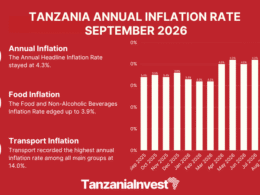
Due to improved food supply, in ation eased to an estimated 3.5% in 2018.
Tanzania economic outlook
According to the AfDB the medium-term outlook is positive, with growth projected at 6.6% in both 2019 and 2020, supported by large infrastructure spending.
Headline inflation is projected to marginally increase to 5.2% in 2019 and 5.1% in 2020 due to increased government spending.
But the positive outlook faces several downside risks: growing private sector concerns about economic policy uncertainty and increased domestic arrears that could derail the government’s scal consolidation and harm the private sector.
Key economic development challenges include slow progress towards inclusive growth, infrastructure bottlenecks, and vulnerability to climate change.
Poverty and income inequality remain high despite high economic growth.
Infrastructure bottlenecks are most notable in the transport and energy sectors.
Reliance on rain-fed agriculture has exposed farmers to income shocks. And inefficient public enterprises present a scal risk.
One of the development challenges on the social front is youth unemployment, which increased to 7.3% in 2016, compared with 5.7% in 2012.
Key opportunities include peace and political stability, abundant natural resources, a strategic geographic location, and immense development potential for tourism.
The Export Zone Processing Agency (EPZA) established in 2008 to accelerate manufacturing exports and help the country achieve structural transformation has helped attract close to USD 1 billion in foreign direct investment and revive the manufacturing sector into one of the fastest growing in Africa.
Want to know more about the Economy in Tanzania? Our free overview of the Tanzania Business and Investment Guide 2026 covers the Economy, plus key sectors and investment opportunities. The complete 141-page edition includes policies, taxation, key regulations, full macroeconomic data, and sources, and is also available at no cost upon completion of a short form.
Download Free OverviewGet the Full Edition for Free