


An International Monetary Fund (IMF) team visited Tanzania from 20th February to 4th March 2020 to assess the state of the national economy.
At the end of the visit, the head of the mission Mr. Enrique Gelbard issued a statement with a number of highlights and the reforms needed.
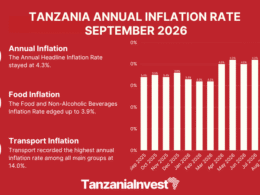
- The pace of economic activity appears to have increased in recent months prompted by higher public investment, a rebound in exports, and an increase in credit to the private sector. As a result, real GDP growth is estimated to be close to 6%, with activity buoyant in the construction and mining sectors. Other economic indicators point to a benign economic environment, with annual inflation at 3.7%, a stable exchange rate, foreign exchange reserves equivalent to near 5 months of imports, and public debt at below 40% of GDP.
- Prudent fiscal and monetary policies have delivered economic stability. To sustain these gains, increase private investment, and create jobs, there is a pressing need to proceed with targeted economic reforms.
- Tax reforms are needed to improve the business climate and increase government revenues. The mission team commended the authorities for their intention to improve governance in tax administration and emphasized the urgency to adhere to efficient means of tax collection and control, notably through the use of risk-based audits. This will ensure better compliance and timely payment of tax refunds and improve companies’ cash flows. Although a comprehensive review of tax exemptions and their further rationalization (particularly of income tax incentives) is also needed, there is a significant and immediate revenue potential from the expansion in the number of taxpayers together with improvements in tax administration and compliance in line with established protocols and regulations.
- Regarding government spending, the implementation of planned measures to clear the backlog of expenditure arrears, account for them on a timely basis, and prevent the accumulation of new ones will be essential to improve businesses’ cash flows, ensure that bank loans are paid back on time, and sustain economic activity. In addition, spending on health and education will need to be scaled up in the coming years while ensuring the quality of education and medical services and addressing key infrastructure gaps. Such expenditures will need to be carefully designed and prioritized in order to reap potential benefits in terms of better social conditions and high rates of economic growth.
- The financial system remains stable and the authorities plan to proceed with measures to further reduce non-performing loans and improve banking supervision to protect banks’ soundness. To lower the costs of borrowing and improve access to credit, broadening the pool of acceptable collateral, improving the framework for credit information, and tackling judicial bottlenecks for the recovery of unpaid loans will be particularly important.
- The economic prospects also depend on enhancing the attractiveness for investing and producing in Tanzania and increasing the skills of the labor force. On the former, in addition to the authorities’ anti-corruption stance, there is a need to accelerate the implementation of business environment reforms (the Blueprint for Regulatory Reforms) starting with the publication of the action plan containing a timetable and a delineation of responsibilities, the rationalization of agencies and licenses and permits, and the removal of nontariff barriers to trade. On the latter, following up on the regular dialogue with the private sector and investing in education and expanding training and vocational programs will be critical, together with a more flexible and expeditious system of visa/work permits for specialized foreign workers.
The IMF Executive Board is expected to discuss the 2020 Article IV Consultation report by May 2020.

Want to know more about the Economy in Tanzania? Our free overview of the Tanzania Business and Investment Guide 2026 covers the Economy, plus key sectors and investment opportunities. The complete 141-page edition includes policies, taxation, key regulations, full macroeconomic data, and sources, and is also available at no cost upon completion of a short form.
Download Free OverviewGet the Full Edition for Free