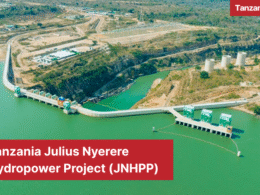

The African Development Bank (AfDB) is funding the construction of the Zuzu substation in Tanzania’s capital city Dodoma, connecting 121 villages to the power supply.
The Bank provided USD 64.855 million to finance part of the country’s Backbone Transmission Investment Project, which included the construction of 670-kilometre Iringa-Dodoma-Singida-Shinyanga transmission line and four extended 220-kV substations.
The construction of the Zuzu substation in Dodoma, which is the core of the Iringa-Shinyanga backbone transmission line, connects 121 villages to electricity and significantly improves and stabilizes access to electricity in Tanzania.

During AfDB President Akinwumi Adesina’s visit to the substation, Tanzania’s Minister of Finance and Planning, Philip Mpango, commented: “Our objective was to provide adequate transmission infrastructure to link existing and future generation sources located in the south and southwest Tanzania to the load centres in Mwanza and Arusha regions in the north.”
Since 1971, the African Development Bank has invested over USD 200 million in Tanzania’s power sector and helped connect more than 130,000 customers and over 18,000 businesses, and small and medium enterprises to electricity.
According to Subira Mgalu, Tanzania’s Deputy Minister for Energy, the Bank has also shown an interest in financing other energy projects in generation, transmission and distribution, and the development of geothermal resources in Tanzania.
“The Government’s target is to have at least a 10,000-MW generation capacity in 2025,” said Mgalu. “It is our greatest hope that the Bank will continue to be a leading development partner and offer the needed support to Tanzania to help make this a reality.”
Tanzania Power
Currently (2016), Tanzania’s total power installed capacity is 1,357.69 MW composed of hydro 566.79 MW (42%), natural gas 607 MW (45%) and liquid fuel 173.40 MW (13%).

Tanzania also imports power from Uganda (10 MW), Zambia (5 MW) and Kenya (1MW).
The average electricity consumption per capita in Tanzania is 108kWh per year, and the demand for electricity is estimated to be growing at 10–15% per year, with currently only 24% of the total population having access to electricity.
In order to meet this demand, the Government is planning to increase Tanzania’s generation capacity to 10,000 MW in 2025.
Want to know more about Energy in Tanzania? Our free overview of the Tanzania Business and Investment Guide 2026 covers Energy, plus key sectors and investment opportunities. The complete 141-page edition includes policies, taxation, key regulations, full macroeconomic data, and sources, and is also available at no cost upon completion of a short form.
Download Free OverviewGet the Full Edition for Free