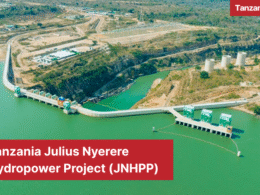

Access to Electricity in Rural Tanzania Reach 69.6% of Villages in 2021

Tanzania Rural Eletrification 2021

The Director-General of the Rural Energy Agency (REA), Eng. Hassan Saidy recently disclosed that rural access to electricity has increased to 69.6% from 2% enabling it to exceed the target of 50% by 2020.

Going into details, in a press conference he explained that since the commencement of the work of the Rural Energy Agency (REA) in 2007, the agency has facilitated the construction and expansion of 38,296 km of 33 kilowatts of power systems and the construction of 35,250 km of low power systems.

Other achievements include installing 725 biogas plants in different rural areas, and installing electricity systems to 831 civil servants households in the education and health sector in Shinyanga, Kigoma, Kagera, Pwani, Lindi, Mtwara, Ruvuma, and Tabora regions.

All in all, REA has achieved a total of 716,847 customers connected to electricity at a cost of TZS 2,661.93 billion.

Access to electricity also means that rural populations can develop agro-processing and small to medium industries in upcountry regions.

Tanzania Rural Energy Agency

REA is an autonomous body under Tanzania’s Ministry of Energy and Minerals. Its main role is to promote and facilitate improved access to modern energy services in rural areas of mainland Tanzania, where approximately 70% of the 50m population lives.

REA aims to give electricity access to 75% of rural Tanzania by 2025 and achieve full coverage by 2030.

Want to know more about Energy in Tanzania? Our free Tanzania Business and Investment Guide 2026 covers Energy, plus regulations, key sectors, and investment opportunities—all in one place.

Download Free Guide
Related Posts
Tanzania ASSESSMENT OF ECONOMIC IMPACTS ON TANZANIA ARISING FROM THE GULF CRISIS
Read More

Tanzania Gulf Crisis Report Rates Energy, Food, Transport, Tourism and Budget at High Risk

A May 2026 rapid assessment by Tanzania's National Planning Commission and UNDP rates energy, food, transport, tourism and the Government budget at high risk from the Gulf crisis, which raised Dar es Salaam fuel prices by up to 69% between January and May 2026. The report flags a possible TZS 153.7 billion monthly customs revenue shortfall and fuel subsidy needs rising to TZS 1,384.2 billion by July, alongside buffers including a 124% food self-sufficiency ratio, USD 6.3 billion in reserves and 57 trillion cubic feet of gas.
Tanzania-Rwanda energy cooperation agreement 2026 Hassan Kagame
Read More

Tanzania and Rwanda Sign Energy Cooperation Agreement Covering Power Trade, Oil, Gas and LNG

Tanzania and Rwanda signed a bilateral energy cooperation agreement covering cross-border electricity trade, joint power infrastructure development, and petroleum product distribution. The deal also extends to oil and gas exploration, LNG project opportunities, and the use of artificial intelligence in the energy sector, building on the existing 80 MW Rusumo interconnection, which has synchronized the grids of Tanzania, Rwanda, and Burundi since March 2024.
Russia Maxim Reshetnikov Tanzania Kitila Mkumbo
Read More

Tanzania and Russia Agree to Open Industry, Energy, and Infrastructure to Joint Investment

Tanzania and Russia have agreed to deepen investment cooperation in industry, energy, transport infrastructure, and air transport, with value-addition processing, production technology, and goods transportation named as priority areas at the Third Joint Intergovernmental Commission held in Arusha on 15–16 May 2026, which drew 120 Russian companies. The deals also cover Russian investment in mining, agriculture, and ICT, direct Air Tanzania (ATCL) flights to Russia, and a signed agreement to promote the Swahili language in Russia.