

Construction of Tanzania Singida Gold Project Commenced

SINGIDA GOLD PROJECT CONSTRUCTION

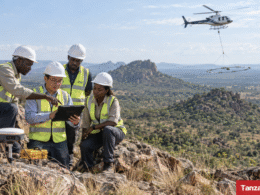
Gold mining company Shanta Gold (AIM: SHG) recently announced that the construction of the Singida gold project is being commenced.

The Singida project is an open pit gold project covering an area of about 98 km2 located in the greenstone belt within the Ikungi district in the Singida region of central Tanzania.

Total capital investment in the project comes at USD 26 million over a 24-month construction period. The investment will be funded by Shanta’s internal cash flows.

Tanzania Investment Guide 2026 Free Edition

Expected annual production is projected at 32,000 ounces over an initial life of mine of seven years.

The Singida project currently employs 60 people, expected to increase to 300 at steady state production. Shanta is targeting a workforce comprising 100% of Tanzanian nationals.

Eric Zurrin, Chief Executive Officer, commented: “[…] Singida will have a major positive impact on the Ikungi region. Shanta intends to roll out its well-regarded CSR program into the surrounding villages which will lead to improvements in livelihoods, water, health and education.”

Tanzania Gold

Tanzania gold reserves are estimated at about 45 million ounces. Gold exploration has been centered mostly on the greenstone belts around Lake Victoria, where several large deposits have already been discovered and are being developed.

Tanzania’s gold production increased by more than 700% over the past 25 years, from 5 to 40-50 tonnes per year, while South Africa’s production of gold decreased from over 500 tonnes in 1990 to 117 tonnes in 2018.

Tanzania Investment Guide 2026 Full Edition

Current active gold mines include Buckreef, Bulyanhulu, Buzwagi, North Mara, Geita, New Luika, and Golden Pride.

Want to know more about Mining in Tanzania? Our free overview of the Tanzania Business and Investment Guide 2026 covers Mining, plus key sectors and investment opportunities. The complete 141-page edition includes policies, taxation, key regulations, full macroeconomic data, and sources.

Download Free OverviewGet the Full Guide
Related Posts
IMF Tanzania flag
Read More

IMF Approves USD 443.9 Million for Tanzania, Projects 6.2% GDP Growth Supported by Mining, Agriculture, and Tourism

The IMF Executive Board has approved an immediate disbursement of USD 443.9 million to Tanzania after completing the final reviews under the Extended Credit Facility and Resilience and Sustainability Facility programmes. The IMF said Tanzania maintained strong economic growth and macroeconomic stability while highlighting the need for continued reforms and fiscal consolidation.
Tanzania Grinding-Ball
Read More

Chinese Company to Build Grinding-Ball Factory at Buzwagi SEZ

China's Oriental Casting and Forging Ltd plans to establish a factory for steel grinding balls and other mining consumables at the Buzwagi Special Economic Zone in Kahama, Shinyanga, following a meeting between Minister of Minerals Anthony Mavunde and the company's managing director Hou Songcun. The project is part of Tanzania's push to manufacture mining consumables locally, cut import dependence and position itself as a regional supply hub, though no investment value or job figures have been disclosed.
Tanzania Mining Revenues 2025-2026
Read More

Tanzania Mining Revenue Hits TZS 1.39 Trillion in 2025/26, Beating Target by 16%

Tanzania mining revenue reached TZS 1.394 trillion (± USD 558 million) in the 2025/26 financial year, surpassing the annual target of TZS 1.2 trillion by 16.13% and marking a 30.2% increase over the TZS 1.071 trillion collected in 2024/25. The result caps a period of rapid growth for the sector, whose GDP contribution averaged 11.9% in 2025 and whose mineral exports rose 31.1% to USD 5.4 billion.
Tanzania Anthony Mavunde Parliament Bunge
Read More

Tanzania Allocates 10% of Mining Revenue to Expand Mineral Exploration

Tanzania has approved the allocation of 10% of mining sector revenue to finance advanced mineral exploration activities across the country. The funding is expected to support high-resolution surveys, identify new mineral-rich areas, attract investment, and strengthen the sector's contribution to economic growth.