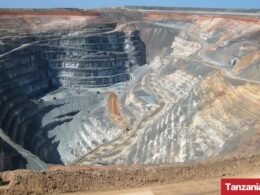


Resource Mining (ASX:RMI) recently announced that it has commenced exploration field activities on its Tanzania Kabulwanyele Nickel Project in Tanzania.
A geological team has already completed a desk study of regional geology and previous work undertaken.
An exploration team has now been mobilized to the site to commence field exploration activities, which include geological mapping and collection of systematic soil and rock samples.

The sampling program aims at studying the distribution of nickel and cobalt mineralization in the area of known mineralization. It will comprise a total of 300 samples that will be collected to cut across the known nickel deposit.
Geological mapping will be conducted in the area previously mapped to have nickel laterites including a buffer of 400m from the boundary of the known mineralization. The main objective will be to delineate the mineralization boundaries, identify more areas of mineralization, and generate drilling targets.
The Kabulwanyele Nickel Project (KNP)
The KNP nickel project is located in the Mpanda District, approximately 35km from the western shore of Lake Tanganyika. The area is part of the western limb of East African Rift systems.
The KNP covers part of the Ubendian rock system of lower Proterozoic rocks, comprising mainly of acidic gneisses, granulites, amphibolites, and ultramafic rocks. Laterite hills at Kabulwanyele are prospective for nickel, cobalt, and manganese. The area has not been subject to modern exploration.
In February 2021, Resource Mining acquired 75% of Australian company Eastern Nickel, which holds 99% of the shares in Eastern Nickel Tanzania (ENT), which has a complete interest in the Kabulwanyele Nickel Project.

Want to know more about Mining in Tanzania? Our free overview of the Tanzania Business and Investment Guide 2026 covers Mining, plus key sectors and investment opportunities. The complete 141-page edition includes policies, taxation, key regulations, full macroeconomic data, and sources, and is also available at no cost upon completion of a short form.
Download Free OverviewGet the Full Edition for Free