
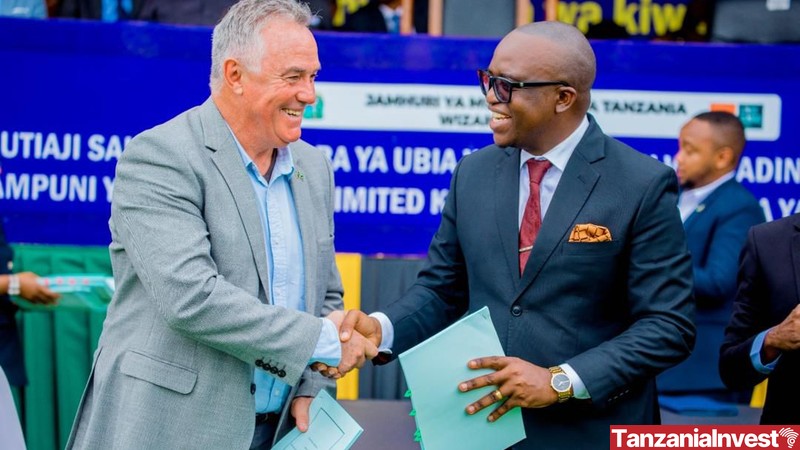
Tanzania has formalized its statutory 16% equity stake in the Lindi Jumbo graphite mine in Ruangwa, Lindi Region, through the signing of a joint venture agreement with Lindi Jumbo Limited, creating a new entity called Ndovu Graphite Limited.
The signing ceremony took place on May 28, 2026, in Ruangwa District, Lindi Region, with Minister of Minerals Anthony Mavunde signing on behalf of the Tanzanian government.
Under the agreement, Lindi Jumbo Limited retains 84% of the joint venture, with the Tanzanian government holding the remaining 16% through non-dilutable free carried interest shares, as mandated by Tanzania’s Mining Act 2017.

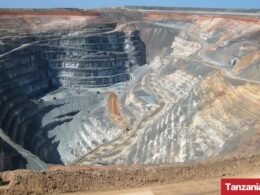
The Lindi Jumbo mine, valued at over USD 82 million, has an annual production capacity of 40,000 tonnes of graphite concentrate and a mine life of 24 years, and has generated over 300 jobs to date.
“President Dr. Samia Suluhu Hassan has continued to build and position our country as a nation with a clear economic vision, a favorable investment environment, and strong management of its natural resources,” said Minister of Minerals Anthony Mavunde.
Minister Mavunde noted that Tanzania currently ranks sixth globally in graphite production, with current annual output of 25,000 tonnes from two large-scale producing mines: Lindi Jumbo in Ruangwa and God Mwanga in Tanga.
The minister added that the remaining 28 license holders are at various stages of commencing production, and warned that those who fail to begin production as required by law risk having their licenses revoked.
Mavunde stated that Tanzania is positioning itself to compete with China, which currently leads global graphite production at approximately 1.2 million tonnes per year, through more than 30 companies holding medium and large-scale graphite mining licenses.

The minister described graphite as a foundation mineral for the global energy transition, given its role in the production of batteries for electric vehicles.
Lindi Jumbo Graphite Mine
The Lindi Jumbo graphite deposit is located in Ruangwa District, Lindi Region, in southeastern Tanzania, approximately 200km from the port of Mtwara, and is recognized as one of the highest-grade graphite deposits in Africa, with average ore grading of 17.9% Total Graphitic Carbon (TGC) and confirmed reserves of 5.5 million tonnes.
The mine produces several grades of graphite classified by flake size, including Super Jumbo, Jumbo Large, and Jumbo Fine, with India currently its main export market and the company pursuing qualification into China and Germany.
In May 2024, Lindi Jumbo shipped its first consignment of on-specification graphite concentrate, and by June 2025 the mine had reached its full annual production capacity of 40,000 tonnes.
Andrew Cunningham, Managing Director of Lindi Jumbo Limited, has stated that alongside expanding mine production, the company will continue exploration activities to identify additional mineral deposits that could extend the mine’s operational life and increase long-term economic benefits for Tanzania.
Lindi Jumbo Limited was previously a wholly owned subsidiary of Walkabout Resources (ASX: WKT), which entered voluntary administration in November 2024 following a cash flow crisis linked to shipping delays at the port of Dar es Salaam and cost overruns.
Want to know more about Mining in Tanzania? Our free overview of the Tanzania Business and Investment Guide 2026 covers Mining, plus key sectors and investment opportunities. The complete 141-page edition includes policies, taxation, key regulations, full macroeconomic data, and sources, and is also available at no cost upon completion of a short form.
Download Free OverviewGet the Full Edition for Free