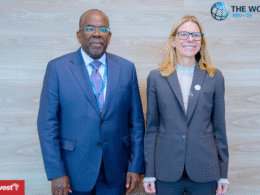




The African Development Bank Group (AfDB) has approved a USD 10 million trade finance transaction guarantee facility for Exim Bank Tanzania Limited to unlock and de-risk trade deals in the country.
Exim Bank is Tanzania’s fourth-largest bank and operates in Uganda, Djibouti, and Comoros.
The facility will provide up to 100% guarantees to international confirming banks against the risk of non-payment, enabling Exim Bank to expand access to trade finance for local businesses.

It is expected to support up to USD 60 million in trade transactions over three years, reducing the bank’s reliance on foreign exchange collateral and freeing up resources for lending to small and medium-sized enterprises (SMEs) and local corporates engaged in intra-African and international trade.
AfDB’s Head of Trade Finance, Lamin Drammeh, said the facility aligns with the Bank’s broader goal to promote trade and regional integration.
“Trade finance is essential for Africa’s economic development, facilitating both domestic and international trade, boosting economic growth and promoting regional integration,” he noted.
Exim Bank Tanzania Chief Executive Officer, Jaffari Matundu, said the partnership will strengthen the private sector and enhance Tanzania’s competitiveness.
“SMEs and corporates are vital engines of industrialization, innovation, and job creation, and this facility will remove barriers to cross-border trade while opening doors for new partnerships with global and regional financial institutions,” Matundu said.

Key sectors expected to benefit include agriculture, health, energy, and manufacturing through the import of essential goods such as fertilizers, pharmaceuticals, and equipment, as well as the export of Tanzanian commodities like coffee, cashew, and cotton.
The project aligns with the African Development Bank’s 2024–2033 Ten-Year Strategy, the 2021–2025 Tanzania Country Strategy Paper, and the government’s Tanzania Vision 2025.
These frameworks prioritize improving access to finance for the private sector and promoting job creation through enhanced trade and competitiveness.
“This partnership with Exim Bank Tanzania demonstrates the African Development Bank Group’s commitment to reducing Tanzania’s trade finance gap, empowering local businesses to compete globally and create more jobs across the country,” Drammeh concluded.
Want to know more about Agriculture in Tanzania? Our free overview of the Tanzania Business and Investment Guide 2026 covers Agriculture, plus key sectors and investment opportunities. The complete 141-page edition includes policies, taxation, key regulations, full macroeconomic data, and sources, and is also available at no cost upon completion of a short form.
Download Free OverviewGet the Full Edition for Free