Energy
Tanzania's energy sector reached 1,938.35 MW of installed capacity as of 31 December 2023, with natural gas accounting for 63% (1,193.82 MW), hydropower 32% (601.60 MW), and peak demand of 1,482.80 MW recorded in August 2023.
Tanzania is endowed with diverse energy sources including biomass, natural gas, hydro, coal, geothermal, solar, wind, and uranium—much of it still untapped.
The country is advancing transformative flagship projects that will reshape its energy landscape and consolidate its role as a regional energy hub.
The Julius Nyerere Hydropower Plant (2,115 MW) on the Rufiji River—the largest in Tanzania and Africa—commenced initial generation of 235 MW in February 2024 and is being commissioned to anchor national supply, while the Lindi LNG Project is identified under FYDP IV as a Flagship Project to monetise Tanzania's 57 trillion cubic feet of natural gas reserves.
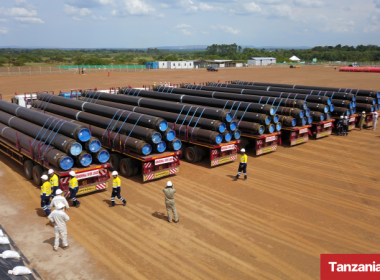
The East African Crude Oil Pipeline (EACOP), a 1,443 km Uganda-Tanzania pipeline supported by the World Bank policy environment for cross-border infrastructure and aligned with Vision 2050 (TDV 2050), reached 82% completion as of April 2026, with first oil expected in July 2026 and 12,000 jobs created across both countries.
These investments dovetail with Tanzania's broader infrastructure push—SGR connectivity, Roads expansion, Ports modernisation, Airports upgrades, and BRT (DART) urban transport—creating an integrated platform for industrial users including Iron and Steel manufacturing, Housing developments led by the NHC (National Housing Corporation), and Commercial Properties served by modern Sewerage and utility networks.
Power Generation Mix
Tanzania's total installed electricity capacity stood at 1,938.35 MW as of 31 December 2023, comprising 1,899.05 MW on the national grid and 39.30 MW off-grid.
The generation mix is dominated by natural gas at 1,193.82 MW (63%), followed by hydropower at 601.60 MW (32%), heavy fuel oil at 83.93 MW (4%), and biomass at 10.5 MW (less than 1%).
Tanesco operates 8 natural gas plants, 7 hydropower plants, 2 heavy fuel oil plants, and 7 small gas oil plants, while Songas remains the largest independent power producer (IPP) with 190 MW utilising Songo Songo gas.
Peak demand reached 1,482.80 MW in August 2023 and is growing at 10-15% per year per Tanesco, prompting the government to target 5,000 MW by 2025 through the Julius Nyerere Hydropower Plant (2,115 MW) and expanded gas-fired generation.
Gas
Tanzania holds proven natural gas reserves of 57 trillion cubic feet, with annual production of 110 billion cubic feet.
Three producing fields anchor current output—Songo Songo, Mnazi Bay, and Kiliwani North.
The Lindi LNG Project is designated as the FYDP IV Flagship Project for natural gas monetisation, positioning Tanzania to become the next natural gas hub in Africa per TPDC.
Hydropower
Tanzania's installed hydropower capacity is 601.60 MW against an estimated potential of 4.7 GW per the Ministry of Energy.
The Julius Nyerere Hydropower Plant on the Rufiji River, with 2,115 MW—the largest in Tanzania and Africa—was 95.83% complete as of January 2024, with initial generation of 235 MW commencing in February 2024.
A robust pipeline supports further expansion, including Rusumo (80 MW, Rwanda-Tanzania-Burundi tripartite), Malagarasi (49.5 MW, commissioning 2028), Kakono (87.8 MW, commissioning 2029), Ruhudji (360 MW), and Rumakali (22 MW).
Small hydro potential is estimated at 1,500 MW, with only 5% currently harnessed.
Renewable Energies
Tanzania enjoys 2,800-3,500 sunshine hours per year and solar radiation of 4-7 kWh/m²/day, supporting approximately 6 MW of installed solar PV, with government having removed VAT and import tax on panels, batteries, inverters, and regulators.
Wind resources are viable at Kititimo (9.9 m/s) and Makambako (8.9 m/s), with Mwenga (2.4 MW) operating as the first wind farm in the Iringa region.
Biomass remains the largest overall energy source, with 95%+ of households relying on firewood and charcoal, while approximately 18 MW feeds the grid and 58 MW is generated through agro-industry self-generation.
Geothermal potential exceeds 650 MW across the East African Rift System, with 50+ hot spring clusters identified, and the Tanzania Geothermal Development Company (TGDC) leading exploration.
Renewables excluding large hydro currently account for only 4.9% of generation capacity.
Oil and Petroleum
Tanzania does not produce crude oil and remains a net importer of petroleum products.
In 2022, petroleum imports totalled USD 3.3 billion, supplied via the Bulk Procurement System (BPS) introduced in 2011.
Main suppliers are India, the UAE, Saudi Arabia, and Oman.
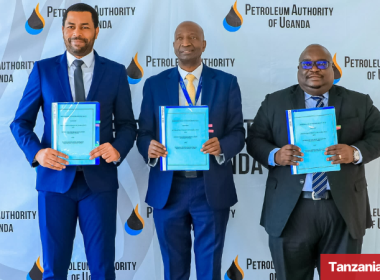
The East African Crude Oil Pipeline (EACOP)—a 1,443 km Uganda-Tanzania pipeline with capacity of 246,000 barrels per day—was 82% complete as of April 2026, with first oil expected in July 2026 and 12,000 jobs created across both countries.
Power Distribution
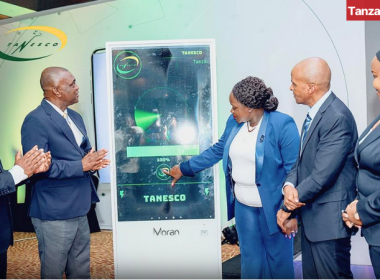
Tanesco controls 98% of electricity distribution in Tanzania, serving a customer base of more than 3.7 million.
The national distribution network spans 160,811 km—comprising Tanesco's 160,367 km and Mwenga Power's 444 km—plus 596 km operated by smaller licensed entities.
Mwenga Power Services is the second licensed distributor, complementing Tanesco's nationwide reach.
Policies
The Ministry of Energy provides sector governance and policy direction, while the Energy and Water Utilities Regulatory Authority (EWURA) regulates licensing, tariffs, and standards across electricity, petroleum, and natural gas.
The Rural Energy Agency (REA), Rural Energy Board (REB), and Rural Energy Fund (REF), established in 2005, drive the rural electrification programme, with a target of 100% village electrification by June 2024.
The Tanzania Petroleum Development Corporation (TPDC) leads upstream gas and petroleum activities, while the Petroleum Upstream Regulatory Authority (PURA) oversees upstream petroleum operations.
Active Production Sharing Agreements (PSAs) have dropped from 26 to 11, and the government is now seeking to revitalise petroleum exploration through revised licensing terms.
FYDP IV identifies the Lindi LNG Project as a flagship for monetising the country's 57 trillion cubic feet gas reserves, with key downstream infrastructure planned around Lindi, Dodoma, Kigamboni, and Bagamoyo industrial corridors.
Investment Opportunities
Independent power generation offers proven viability for private participation, with the gas-based model already validated at 190 MW scale and a hydropower pipeline including the 360 MW Ruhudji project open to new entrants. Public-Private Partnership structures further extend opportunities into transmission and distribution build-out.
Off-grid solar systems and mini-grid solutions present strong commercial prospects across rural areas where main grid extension is uneconomic. Site-level demand from agriculture, health facilities, and small enterprises anchors recurring revenue.
The EACOP value chain opens entry points across pipeline construction, marine terminal operations at Chongoleani (Tanga), and downstream logistics and services. Adjacent contracting in inspection, security, and equipment supply broadens the addressable scope.
The Lindi LNG project represents a long-term opportunity to monetise 57 trillion cubic feet of gas reserves, with linked plays in Mortgages, Properties, and Commercial Properties development for workforce housing in host regions.
Geothermal exploration along the East African Rift System is advancing toward a 130 MW target by 2030, with active partner sourcing for drilling and plant development. Early-stage equity positions in resource confirmation carry meaningful upside.
Solar manufacturing, assembly, and distribution benefit from VAT and import tax removal on solar components, lowering landed costs and improving project IRRs. This supports a diversified pipeline spanning utility-scale, commercial, and residential segments.
Last Update: May 2026
References
Want to know more about Energy in Tanzania? Our free overview of the Tanzania Business and Investment Guide 2026 covers Energy, plus key sectors and investment opportunities. The complete 141-page edition includes policies, taxation, key regulations, full macroeconomic data, and sources, and is also available at no cost upon completion of a short form.
Download Free OverviewGet the Full Edition for Free