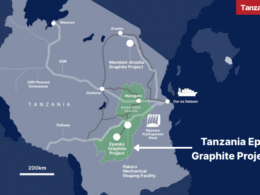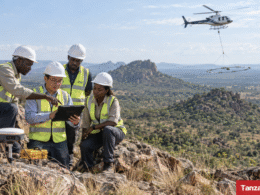

EcoGraf (ASX: EGR; FSE: FMK) has released an updated Bankable Feasibility Study for the Epanko Graphite Project in Tanzania, confirming a 73,000 tonnes per annum operation over the first 15 years and a pre-tax net present value (NPV) of USD 516 million, supporting the next phase of project financing.
The updated study is based on an Ore Reserve of 16.7 million tonnes at 8.2% total graphite carbon, including 7.1 million tonnes in Proven and 9.6 million tonnes in Probable categories, and reflects a 21.7% increase in planned plant throughput to 73,000 tonnes per annum.
The study outlines an internal rate of return of 31.1% and projected annual EBITDA of USD 85.7 million, calculated using a life-of-mine basket price of USD 1,746 per tonne in real 2025 terms, while total capital expenditure includes USD 181.2 million for construction and establishment and USD 18.1 million for the Resettlement Action Plan, including contingencies.

An Independent Engineers Review conducted in parallel with the study confirmed that technical components have been advanced to meet international project financing standards and the Global Industry Standard on Tailings Management, while Environmental and Social Management Planning has been completed in line with Tanzanian legislation, IFC Performance Standards and World Bank Group Environmental Health and Safety Guidelines.
The company stated that its debt financing program is at an advanced stage under the leadership of KfW IPEX-Bank, and that binding offtake and in-principle sales agreements are in place covering 40,000 tonnes per annum of production with existing partners and Germany-based ThyssenKrupp Metallurgical Products GmbH.
A further 20,000 tonnes per annum is expected to convert into binding offtake agreements once production commences, while planning is underway for a Stage 2 expansion to 130,000 tonnes per annum and longer-term expansion studies outline the potential to increase production to 390,000 tonnes per annum within 10 years.
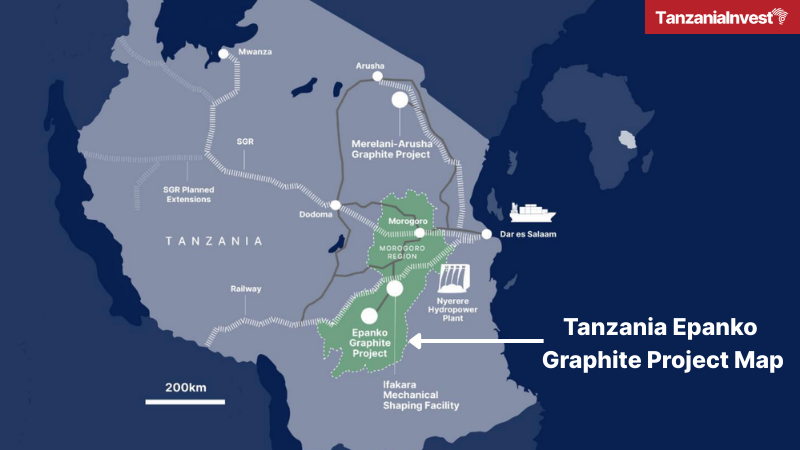
The project is fully covered under a single Special Mining Licence and benefits from grid power and proximity to an established transport corridor supported and funded by the European Commission, positioning Epanko to supply graphite to battery and electric vehicle markets outside China.
EcoGraf Managing Director Andrew Spinks commented: “The combination of the market-leading quality of the Epanko Resource, with the completion of one of the most rigorous technical due diligence programs, cements Epanko as a world-class graphite project, poised for development.”

He added: “The Company is now positioned well to take advantage of the forecasted huge growth in graphite demand, on the back of the increased electric vehicle and energy storage battery boom. The planned Tanzanian midstream and end-user located downstream processing plants are expected to provide the company with significant growth and substantial cash flow generation.”
Graphite demand is forecast to exceed projected global supply from 2026, driven by increased use of natural graphite in lithium-ion batteries for electric mobility and energy storage systems, while recent export restrictions by China on certain dual-use goods, including graphite shipments to Japan, have highlighted supply chain risks for battery manufacturers.
Tanzania hosts several graphite projects targeting international battery markets, with Epanko positioned as a large-scale development aimed at supplying ex-China markets and supporting downstream processing expansion in North America, Europe, and Asia.
Want to know more about Mining in Tanzania? Our free overview of the Tanzania Business and Investment Guide 2026 covers Mining, plus key sectors and investment opportunities. The complete 141-page edition includes policies, taxation, key regulations, full macroeconomic data, and sources, and is also available at no cost upon completion of a short form.
Download Free OverviewGet the Full Edition for Free